Huangshan Sunrise Away From Beihai Where Photographers Go Instead
A practical guide to Huangshan Sunrise Away From Beihai Where Photographers Go Instead.
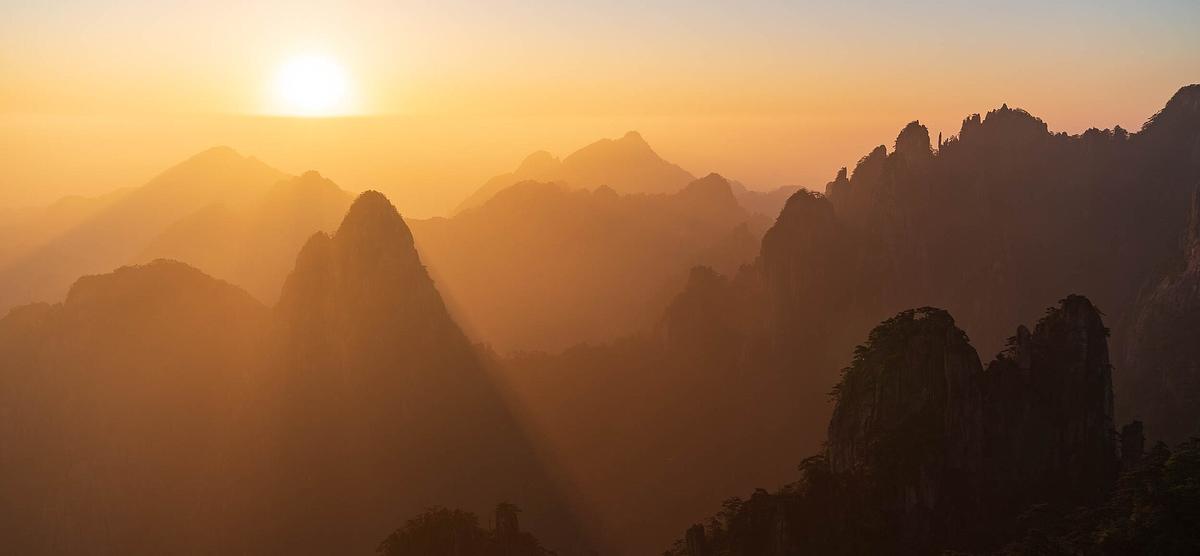

Why Beihai draws the crowds and where to look instead
Beihai's Refreshing Terrace and the broad summit of Bright Summit Peak have long been the default sunrise recommendations for visitors to Huangshan. Their reputation is well earned, but it also means that during peak travel periods finding a clear sightline can require arriving well before first light and standing shoulder to shoulder with dozens of other tripods. The Huangshan Scenic Area Management Committee officially lists several alternative sunrise viewing locations that receive far less attention, and a handful of them offer genuinely compelling compositions without the same press of people.
The tradeoff is straightforward. The popular spots sit closer to the largest concentration of mountain hotels and are accessible on paved paths with minimal elevation gain in the dark. The quieter peaks often require a slightly longer pre-dawn walk from a smaller hotel or a willingness to accept a more constrained foreground. For photographers who value an uncrowded frame over convenience, that exchange is almost always worth making.
Danxia Peak beside Xihai and Paiyunlou
Danxia Peak rises to 1,664 metres in the western summit area, a short walk from both Xihai Hotel and Paiyunlou Hotel. The management committee designates it as an official sunrise location, and its proximity to these two hotels means the pre-dawn walk takes roughly fifteen minutes. Photographers staying at either property can leave their rooms later than those heading to Bright Summit and still arrive with time to set up.
There is an important seasonal limitation. Danxia Peak is recommended for sunrise viewing only during the warmer months, roughly April through October. Outside that window, atmospheric conditions or sightline obstructions may make it a less reliable choice. Anyone planning a spring or winter visit should treat Danxia as a conditional option and confirm current access status with hotel staff or scenic-area notices upon arrival. When conditions align, the western orientation offers a different angle on the granite spires than the more commonly photographed eastern-facing platforms, and the number of people sharing the view tends to be noticeably smaller than at the Beihai-area viewpoints.
Aoyu Peak from the Baiyun Hotel side
Aoyu Peak, also called Turtle Peak, stands at 1,780 metres and delivers wide, open sightlines for both sunrise and sunset. It sits roughly a twenty-minute walk from Baiyun Hotel, and the hotel itself actively encourages guests to consider it as an alternative to Bright Summit. Baiyun Hotel provides a hand-drawn route map that compares the two locations side by side, explicitly marking where fewer people tend to gather for photographs.
The peak's elevation and unobstructed horizon make it a strong candidate when the meteorological bulletin predicts a high probability of cloud sea, a phenomenon that transforms the valleys below into a rolling white expanse. Because Aoyu Peak is not the tallest summit in the immediate area, the rising sun often breaks over lower ridgelines rather than a flat horizon, which can create layered silhouette opportunities that are harder to frame from the highest points. The walk from Baiyun Hotel involves some steps and uneven stone paths, so a headlamp and a careful pace in the dark are advisable.
Gongyang Peak right outside White Goose Hotel
Gongyang Peak sits adjacent to White Goose Hotel, and its defining practical advantage is that guests can watch sunrise from the hotel's immediate vicinity without undertaking a long pre-dawn hike. The management committee lists it as a year-round sunrise spot, which removes the seasonal uncertainty that affects some other peaks.
For photographers travelling with heavier equipment or those who prefer to minimise dark-morning navigation, this proximity is the headline feature. The tradeoff is that the foreground and framing options are more limited than on a standalone summit. The view looks out across the same sea of peaks that defines the Huangshan skyline, but the shooting positions are tied to the hotel's immediate surroundings rather than a dedicated panoramic platform. Even so, the number of people sharing the view at Gongyang Peak is consistently lower than at Bright Summit or Refreshing Terrace, and the ability to step outside moments before sunrise rather than hiking for half an hour in the dark is a genuine differentiator.
Shixin Peak and the capacity advantage
Shixin Peak, often translated as Beginning-to-Believe Peak, has a practical characteristic that sets it apart from most other sunrise platforms on the mountain. Its best shooting positions can accommodate more than ten photographers, whereas the prime spots at many other viewpoints hold fewer than ten people before sightlines become compromised.
This capacity difference matters most on mornings when the meteorological bulletin forecasts exceptional conditions and photographers across the mountain converge on the same handful of locations. At a platform that can only fit six or eight tripods comfortably, late arrivals may find no workable position at all. Shixin Peak's broader layout reduces that risk, though it does not eliminate it entirely during the busiest holiday periods. The peak is officially designated for sunrise viewing by the management committee, and its eastern aspect provides a clean horizon line when visibility is good. Access paths connect from the Beihai area, but the peak itself sits far enough from the largest hotel clusters that the walk acts as a natural filter on crowd size.
Planning around the fixed constraints
Every sunrise photography plan on Huangshan must account for one non-negotiable logistical fact: all summit cable cars operate only during daylight hours, beginning around 07:30 and ending around 16:00. An overnight stay on the mountain is essential. There is no way to ride a cable car up in time for sunrise, and no way to descend after sunset without walking.
This means hotel choice directly determines which sunrise peaks are realistically reachable. A photographer booked at Paiyunlou or Xihai Hotel has Danxia Peak within a short walk. Someone staying at Baiyun Hotel can reach Aoyu Peak in about twenty minutes. White Goose Hotel places Gongyang Peak literally on the doorstep. The decision about where to sleep on the mountain is effectively the decision about where to shoot sunrise, so it is worth making the hotel reservation only after settling on a preferred peak.
Entry to the scenic area itself requires a real-name, timed-entry reservation through the official Huangshan tourism platform, accessible via WeChat and Alipay mini-programs. This is not optional, and capacity is limited. The same platform is the authoritative source for current cable car hours and ticket pricing before travel.
Using the daily meteorological bulletin
The Huangshan Scenic Area Management Committee publishes a daily meteorological bulletin on its official website that includes the sunrise time, a visibility probability, and a cloud-sea probability. These three data points are the most actionable planning tools available to a photographer on the mountain.
A high cloud-sea probability combined with good visibility is the ideal forecast, and it is the scenario that makes the extra effort of reaching a quieter peak most rewarding. A low visibility probability suggests that even the best location will yield flat, grey light, and on such mornings the convenience of a nearby peak may outweigh the marginal benefit of a more distant one. The sunrise time itself shifts throughout the year, and the bulletin provides the precise minute so there is no need to rely on generic seasonal estimates.
Checking this bulletin the evening before, and again on the morning itself if connectivity allows, turns a hopeful pre-dawn alarm into a calculated decision. The same official website also carries notices about trail, platform, and peak access status, including any seasonal closures that might affect Danxia Peak, the West Sea Grand Canyon, Lotus Peak, or Tiandu Peak. A peak that is officially listed as a sunrise spot is only useful if it is open, and access status can change with weather or maintenance schedules.
Sources and verification
- hsgwh.huangshan.gov.cn — Research source checked for this guide
- topchinatravel.com — Research source checked for this guide
- silkroadtravel.com — Research source checked for this guide
- chinahighlights.com — Research source checked for this guide
- chinatravel.com — Research source checked for this guide
- huizhoudeeptour.com — Research source checked for this guide
Read next
-
 Anhui Hotels from Huangshan Summit to Huizhou Courtyards
Huangshan summit hotels sell out weeks ahead and are the only legal way to sleep on the mountain; village guesthouses trade comfort for atmosphere.
-
 Where to Stay in Anhui for Huangshan and the Villages
Tunxi is the convenient transport hub, Tangkou suits hikers, summit hotels give sunrise access, and village courtyards offer atmosphere but less mobility.
-
 Flying to Anhui or Taking the Train From Shanghai Which Works Better
Flying into Tunxi puts you closest to the mountains, but the Shanghai to Huangshan North train often beats Hefei for total time.
-
 Things to Do in Anhui Beyond Huangshan and Hongcun
Beyond Huangshan, Anhui offers the Taoist Qiyun Shan, the Buddhist Jiuhua Shan, quiet villages like Chengkan, and Qimen black tea country.
-
 Best Time to Visit Anhui and Huangshan by Season
April–May and September–October offer the best Anhui weather, but avoid the first week of October and May for National Day and Labour Day crowds.
-
 Getting Around Anhui from Shanghai, Hangzhou and Nanjing
High-speed rail from Shanghai, Hangzhou or Nanjing to Huangshan North is the practical gateway, but villages and trailheads need buses or local cars.
-
 Huangshan (Yellow Mountain)
Huangshan's south gate, cable car choices and summit loop explained, so you can plan a realistic one- or two-day mountain route.
-
 Xuancheng
What Xuancheng prefecture offers travellers moving between Huangshan and the Yangtze, from paper-making towns to quiet bamboo valleys.
-
 Huangshan City
Tunxi is not Anhui's prettiest town, but its rail station, bus hub and Old Street make it the most useful base.