Getting to Anhui from the Rest of China and How Long You Really Need
High-speed rail routes to Anhui explained: which stations to use from Shanghai, Hangzhou, or Beijing, and how many days Huangshan really needs.
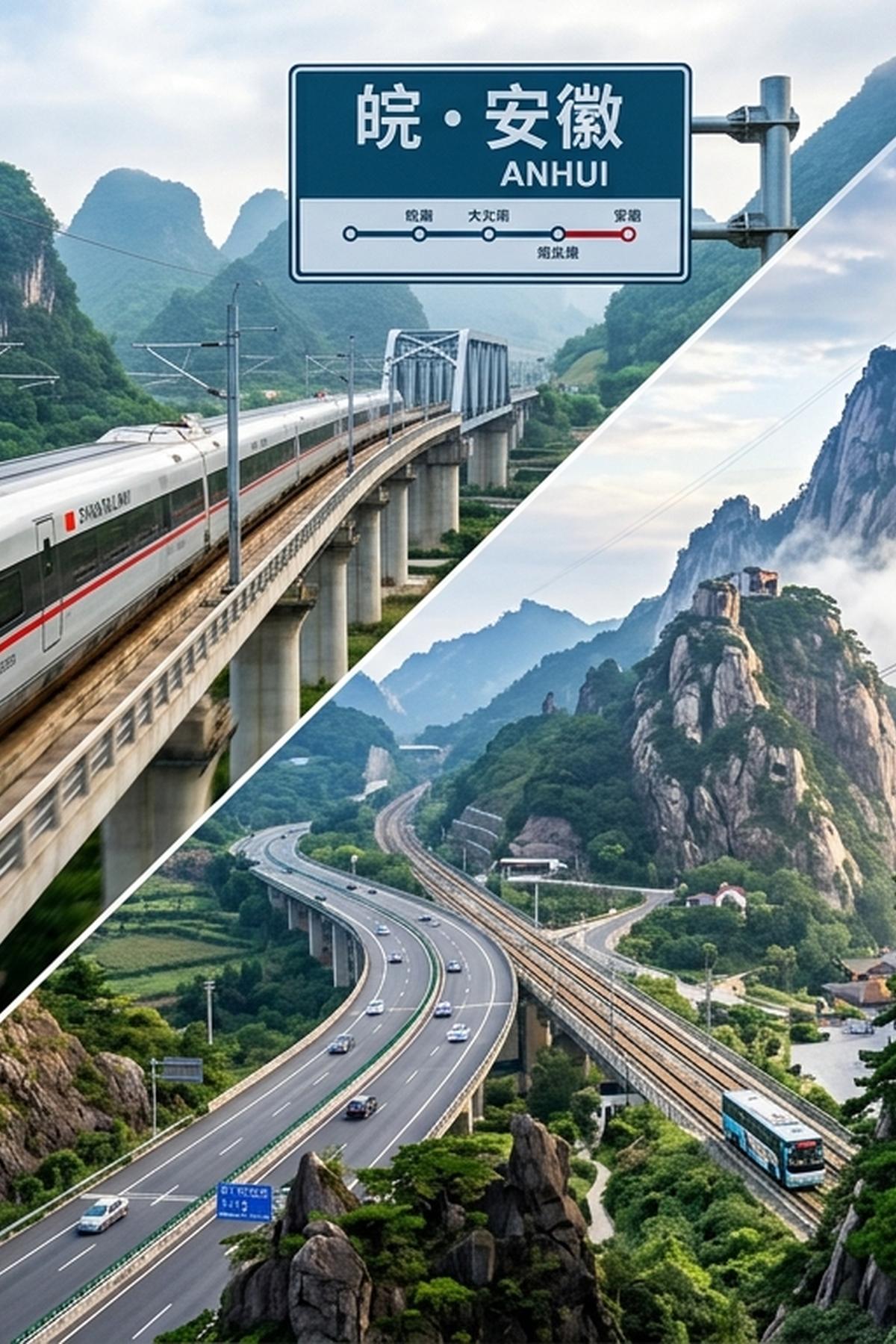
Anhui almost never makes the shortlist. Travelers land in Beijing or Shanghai, tick off the Forbidden City and the Bund, then face a choice between Xi'an's terracotta warriors and Chengdu's pandas. Anhui sits quietly to the side, waiting. That pattern is understandable but costly, because Huangshan is one of the most genuinely spectacular mountains in China, and the whitewashed Hui villages of Huizhou are unlike anything else on the standard tourist circuit. Getting here is actually straightforward once you know which trains to take and which stations to use. The challenge is not access. The challenge is time, and specifically how consistently travelers underestimate how much of it they actually need.
Trip Essentials
Anhui is reachable by high-speed rail from every major city in eastern China, but the logistics are less obvious than they look.
- Huangshan North station is the correct stop for both the mountain and the Hui villages, not Hefei or any station in between
- A meaningful visit needs at least 4 days to cover Huangshan and one or two villages without cutting corners
- The distances between sites are larger than maps suggest, so buffer days matter more than most itineraries allow
Where Anhui Fits on a Wider China Itinerary
If you are still building your broader China route, starting from a solid China travel hub overview before narrowing down to individual provinces will save you time and frustration later. Once you have the big picture sketched out, Anhui's geography starts to make sense. The province is sandwiched between Shanghai to the east, Hangzhou to the southeast, and Nanjing to the northeast. It is not a side trip from any of those cities. It is a destination in its own right that happens to be well-connected by high-speed rail.
Most travelers treat Anhui as a two-to-three-day appendage to a Shanghai stay. That framing tends to produce regret. The connections are good enough that Anhui works better as a standalone stop on your itinerary rather than a rushed add-on. You arrive, spend real time here, and leave via a different city if it suits your onward route. Nothing about the logistics forces you to backtrack.
China's High-Speed Rail Network and What It Means for Anhui
China has built an extraordinary national rail infrastructure, and Anhui benefits directly from it. The province sits on several major lines connecting eastern and central China, which means fast, reliable access from multiple directions. Trains are punctual, the seats are comfortable, and the journey times are significantly shorter than anything involving road travel on provincial roads.
For context, China's high-speed rail network is now the largest in the world, with more than 40,000 kilometers of dedicated track. Huangshan is one of the tourism beneficiaries of this expansion, with direct connections to the major eastern hubs that would have been impossible or extremely slow two decades ago. The key distinction for Anhui is understanding which stations serve which parts of the province, because not all of them are equally useful to international travelers focused on the mountain and the Hui villages.
Arriving from Shanghai, Hangzhou, or Beijing
The Shanghai Route
Shanghai Hongqiao station is where you want to depart from, not Shanghai station. The journey to Huangshan North takes roughly two and a half to three hours on a direct G-train. Services run throughout the day, and booking is straightforward through the 12306 app or a third-party platform that handles seat reservations in English. Buy a few days ahead if you are traveling on a weekend or during a national holiday, because seats fill fast and last-minute options are limited.
From Huangshan North station, the Tunxi area of Huangshan City is about 30 minutes by taxi or local bus. That is your base for visiting the Hui villages. The mountain itself is another 40 minutes from there by shuttle to the cable car base. The full chain from Hongqiao to the mountain entrance runs around four hours when everything is moving smoothly.
From Hangzhou
Hangzhou to Huangshan North is one of the more pleasant short rail journeys in eastern China. The ride takes around two hours, moving through Zhejiang countryside before crossing into Anhui. Trains depart from Hangzhou East. Some services require a change at a smaller intermediate station, so check the booking details rather than assuming every service is direct.
The Hangzhou connection works well if you are combining Anhui with a West Lake visit. The two destinations share deep cultural ties, both rooted in the aesthetic and commercial traditions of southern China, and the rail link makes it easy to treat them as consecutive stops rather than entirely separate trips requiring their own planning logic.
The Long Haul from Beijing
Beijing to Huangshan North typically takes four to five hours by high-speed rail, with most services requiring a change at Hangzhou East or Nanjing South. Fully direct G-train connections exist but run less frequently, so check the specific schedule when planning rather than assuming a direct option will fit your departure window.
Some travelers from Beijing prefer to split the journey, stopping overnight in Nanjing or Hangzhou before continuing south. That approach works well if you want to add another destination along the way. If you are going straight through, an early departure from Beijing puts you in Huangshan City by early afternoon with enough time to settle in before a full day on the mountain.
Huangshan North Station and the Distance Problem
A persistent source of confusion is the name "Huangshan North station" versus the actual mountain. The station sits in Huangshan City, the urban administrative area. The mountain itself is roughly 70 kilometers to the north. From the station, you still need a shuttle bus to the mountain base, then either a cable car or your own legs to reach the summit area. Budget at least 90 minutes from the train platform to the mountain gate, assuming no major delays.
This gap is where first-time visitors lose time they thought they had. Arriving at Huangshan North at midday does not mean you will be walking the ridgelines by early afternoon. Factor in the shuttle, the cable car queue, and check-in at a peak hotel if you are staying overnight on the mountain. An early-morning arrival by train is always the better strategy. Mid-morning is acceptable. Anything later starts eating into your first real day on the mountain in ways that are hard to recover from.
How Many Days a Realistic Huangshan Trip Actually Takes
Comparing What You Can Cover in 3, 4, or 5 Days
| Duration | What You Can Cover | What Gets Cut | Best Suited For |
|---|---|---|---|
| 3 days | Huangshan with one overnight on the peak, plus a brief Hongcun visit | Xidi, Tunxi old street, any second village, slower pace | Travelers with fixed onward connections who prioritize the mountain above all else |
| 4 days | Huangshan with two full days, Hongcun, Xidi, and a Tunxi evening | Off-the-beaten-path villages, an unhurried pace between stops | Most independent travelers, the realistic baseline for a satisfying visit |
| 5 days | All of the above, plus a lesser-visited village and a genuinely relaxed Tunxi evening | Nothing significant | Anyone who wants depth and texture rather than a checklist |
The comparison above assumes you are treating Huangshan seriously, meaning at least one night on the peak. The sunrise views from the summit ridges are not a bonus feature. They are the point. Travelers who do the mountain as a day trip from Tunxi almost always come back wishing they had stayed. The light before dawn, with the sea of clouds sitting below the granite spires, is the image that made Huangshan famous in the first place. You need to be up there to see it.
What Gets Dropped When the Itinerary Is Too Tight
Time pressure has a particular texture in Anhui. It does not mean you miss a museum or skip a famous viewpoint. It means you arrive at Hongcun at 2pm and walk fast through a village that deserves a slow morning. It means you leave before the afternoon light turns the canal water gold. It means Huangshan becomes a cable-car-up-cable-car-down experience, and you come home with generic summit photos rather than something that feels personal.
These are the things most commonly dropped when the itinerary is compressed too far:
- Sunrise from the peak, which requires an overnight stay at one of the mountaintop hotels and a 4am alarm that is absolutely worth setting at least once
- Morning light in Hongcun, when the reflected whitewashed walls in the Moon Pond are undisturbed and the tour groups are still arriving on their buses from the city
- Xidi village, which most travelers skip entirely because Hongcun gets all the attention, even though Xidi is the more intact and considerably less crowded of the two
- Tunxi old street after dark, when the food stalls open and the neon signs reflect off old stone pavement in a way that feels genuinely local rather than staged for visitors
- Walking pace between stops, the unhurried kind that lets a place settle in rather than become another item ticked off a list
The Honest Case for Giving Anhui Four Days Minimum
Three days is survivable if you have no flexibility. You will see Huangshan. You will walk through at least one Hui village. You will leave knowing you did not see enough, and that feeling tends to follow you all the way back to wherever you came from.
Four days changes the math entirely. It gives you two full days on or around Huangshan, time for both Hongcun and Xidi, and an evening in Tunxi that feels genuinely unhurried. You will eat well, walk at a pace that lets you notice things, and leave with the sense that you actually visited rather than passed through.
Five days is the version where you slow down completely. You can take a half-day to a lesser-visited village, spend a second morning above the clouds on Huangshan's quieter western trails, and still have an evening free in Huangshan City without it cutting into anything else on the itinerary.
The trains from Shanghai and Hangzhou make it entirely possible to arrive, stay four nights, and depart in a completely different direction without backtracking. You can arrive from Shanghai and leave toward Hangzhou, or come from Hangzhou and continue toward Nanjing. The network supports flexible routing, which makes fitting Anhui into a longer China trip significantly less complicated than most people assume when they first start planning. The logistics are not the problem. The only real mistake is not leaving enough time.
Read next
-
 Planning a Self-Guided Anhui Trip from Huangshan to the Hui Villages
Plan four days in Anhui with Huangshan hiking, sensible overnight stops, Hui village choices, transport tips, and honest advice on avoiding crowds.
Planning a Self-Guided Anhui Trip from Huangshan to the Hui Villages
Plan four days in Anhui with Huangshan hiking, sensible overnight stops, Hui village choices, transport tips, and honest advice on avoiding crowds.
-
 Reaching Anhui Visa-Free Through China's Transit Rules for a Huangshan Side Trip
How China's 240-hour visa-free transit rules let you reach Huangshan and the Huizhou villages without a full visa.
Reaching Anhui Visa-Free Through China's Transit Rules for a Huangshan Side Trip
How China's 240-hour visa-free transit rules let you reach Huangshan and the Huizhou villages without a full visa.
-
 Golden Week in Anhui, the Weeks to Avoid and What to Do If You Cannot
What Golden Week does to Huangshan, Hongcun and Anhui transport, and the few ways to reduce the damage if you must travel then.
Golden Week in Anhui, the Weeks to Avoid and What to Do If You Cannot
What Golden Week does to Huangshan, Hongcun and Anhui transport, and the few ways to reduce the damage if you must travel then.
-
 Huangshan or Zhangjiajie, Which China Peak Landscape Fits Your Trip
Huangshan's granite peaks and Huizhou villages or Zhangjiajie's sandstone pillars: which mountain landscape suits your China trip.
Huangshan or Zhangjiajie, Which China Peak Landscape Fits Your Trip
Huangshan's granite peaks and Huizhou villages or Zhangjiajie's sandstone pillars: which mountain landscape suits your China trip.