What Tunxi Old Street is actually good for
Tunxi Old Street fills the evening before a Huangshan climb with Huizhou snacks, tea shops and a restored Ming-Qing streetscape.
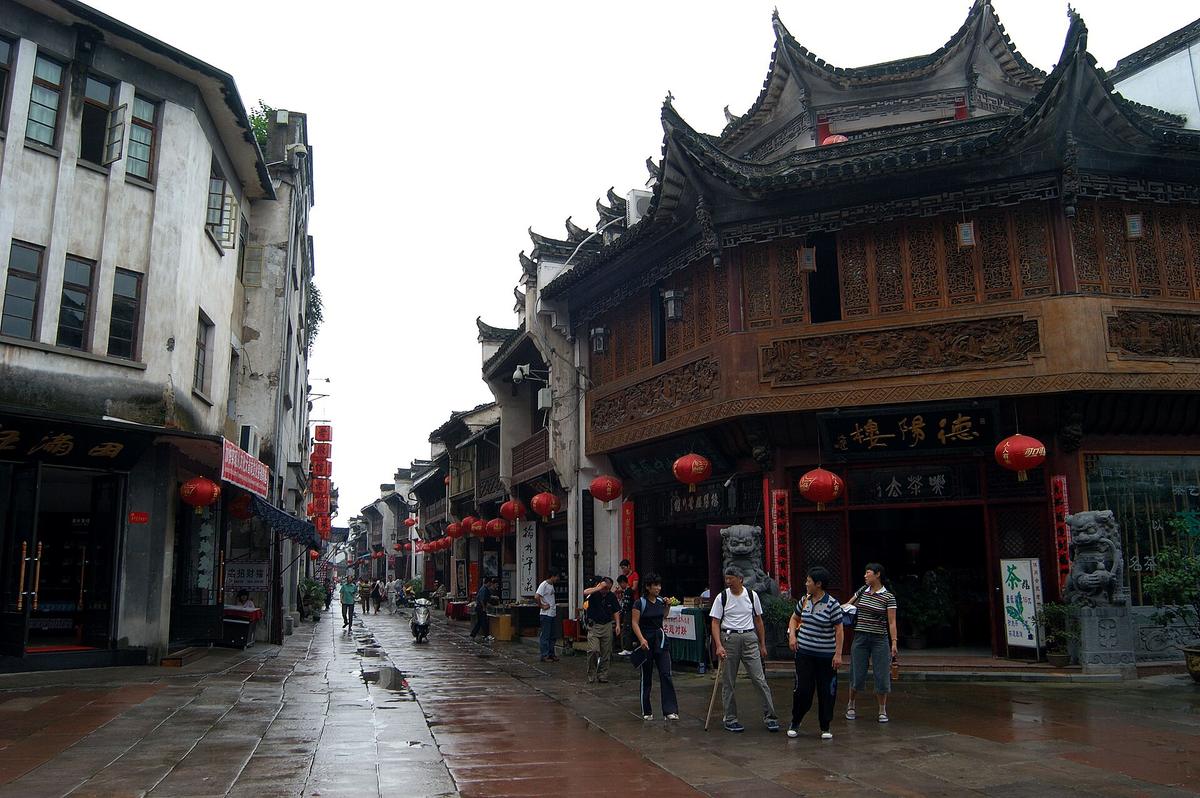

Tunxi Old Street the Evening Before Your Mountain
You arrive in Huangshan city with a full day before the mountain, and you need to fill an evening without wasting it on overpriced tourist traps. Tunxi Old Street is actually good for exactly this. It is a convenient, compact, free introduction to Huizhou culture that sits between your arrival and your summit sunrise. Treat it as a low-stakes warm-up, not a destination. The street runs roughly 1.5 kilometres on original Ming and Qing slate slabs, lined with about 200 traditional shopfronts. It was built originally in the Song dynasty, though the current architecture dates from the Ming and Qing periods, the 14th through early 20th centuries. You are walking on surfaces that Huizhou merchants walked during their peak influence, when they traded salt, timber, tea, ink and rice across China. The street is restored, not untouched. You will see freshly painted wooden facades and uniform red lanterns. Adjust your expectations now. You will enjoy it more than the travellers who arrive expecting a living village and find a shopping arcade instead.
- Length: ~1.5 km main commercial stretch
- Width: 5-8 m
- Surface: Slate slabs, Ming/Qing origin
- Original construction: Song dynasty (960-1279)
- Current architectural style: Ming and Qing dynasties (1368-1912)
- Huizhou merchant peak influence: Ming to mid-Qing (16th-18th centuries)
- Number of Huizhou-style shops: ~200
- Entry fee: Free
- Distance from Huangshan North Railway Station: ~15 km (30-40 min by taxi)
- Evening closing time: Most shops close by 21:00-21:30
What to Eat and What to Skip
Your evening on Tunxi Old Street starts with food. Walk the street from the Zhenhai Bridge end eastward. The food stalls and small restaurants cluster around the middle and eastern sections. Your first stop is a plate of Tunxi sesame cake, crisp and either sweet or savoury, sold fresh from stone ovens on the street. Buy one from a stall that is actively baking, not from a pre-wrapped stack. The smell tells you which one to pick. Grab a Huangshan baked wheat cake while you are at it, a flaky flatbread stuffed with pork or vegetable, best eaten hot.
Where To Sit Down For Dinner
For a proper meal, skip the front-line restaurants with English menus and higher prices. Walk to Laojie Diyilou, which sits right on the Old Street but has a larger sit-down dining room. Order the stinky mandarin fish and a plate of bamboo shoots braised with ham, if they are in season. The fish is pungent, fermented, the defining dish of Anhui cuisine. If you want quicker and cheaper, turn into Erma Road, one of the perpendicular side lanes, where small noodle shops serve knife-cut noodles at local prices. Yideyuan on the street also offers Huizhou-style stinky mandarin fish and hairy tofu. Verify it is open before you walk there. Hours are unpredictable.
Tea Tasting, Not Souvenir Shopping
The street sells genuine local products, but you have to know which ones. The reliable buys are Huizhou inksticks, She inkstones, Huangshan Maofeng tea and Qimen black tea. Many shops on the street brew Maofeng tea for sampling before purchase. Accept the cup. Drink it. That is the whole point of the evening. The tourist-oriented products are easy to spot: mass-produced Mao memorabilia, generic packaged sesame crackers, low-grade jade bracelets, wooden combs, prepackaged fermented tofu kits. Skip all of them. They are the same items sold in every tourist street from Beijing to Guilin. Your evening gains value from the tea and the food, not from plastic bags.
The Side Lanes Hold the Real Street
The main drag of Tunxi Old Street is built for tour groups. Between 10:00 and 15:00 it is congested, loud, mostly souvenir shops. In the evening, after 18:00, the groups thin out, the red lanterns light up, and local foot traffic takes over. That is when you explore the side lanes that run perpendicular to the main street. Yixin Street has fewer stalls and more residential facades. Erma Road connects to the riverside and holds local eateries. Sanma Road is the least renovated, with mixed local shops and no amplified music. These lanes show original Huizhou residential architecture without the polish. Prices are lower. The atmosphere is quieter. You will see washing hanging from upper windows and old men playing chess on stools. That is the part of the street that feels like a real neighbourhood, not a stage set.
How to Use Your Time and What to Expect
Most guidebooks suggest two to three hours for Tunxi Old Street. That duration is accurate if you include tea tasting and the side lanes. If you only walk the main commercial stretch without stopping, you will finish in 45 to 60 minutes. Plan for 90 minutes minimum. That gives you time to eat, sample two teas, walk one side lane, and stand on the Zhenhai Bridge at the western end to watch the river in the dark. The street is free. Enter and exit at will. The eastern end connects to the modern city. The western end hits the river. Use the bridge as a turnaround point. Do not feel obligated to buy anything. You are here to calibrate your senses for the mountain tomorrow, not to fill a suitcase.
What Not To Expect
This is not an untouched ancient town. It is a restored Ming-Qing street that functions as a commercial pedestrian zone. You will hear pop music from some shops. You will see plastic lanterns. You will be asked to buy things. Accept that the street serves a purpose: it fills the gap between your arrival in Huangshan city and your departure for the mountain the next morning. The genuine Huizhou architecture is in the villages. Hongcun and Xidi are an hour away and worth a full day. Tunxi Old Street is for the evening. Arrive by 17:30, eat by 18:00, be done by 20:30. That schedule leaves you time to sleep early for the mountain.

Common Questions
Is Tunxi Old Street worth visiting if I only have one evening?
Yes, but only as a warm-up. You can eat Anhui food, taste local tea, and walk a restored Ming-Qing street in under two hours. It is free and convenient. It will not be the highlight of your trip, but it beats sitting in your hotel.
What should I buy on Tunxi Old Street?
Buy Qimen black tea or Huangshan Maofeng tea from a shop that lets you sample first. Consider Huizhou inksticks or She inkstones if you are a calligraphy collector. Skip the Mao memorabilia, jade bracelets and pre-packaged snacks.
What time should I go to Tunxi Old Street in the evening?
Arrive by 17:30. The lanterns come on around dusk, tour groups have left, and local foot traffic increases. Most shops close by 21:00, so you have a three-hour window. Eat early to avoid the dinner rush at the popular restaurants.
Can I visit Tunxi Old Street if I am staying in Tangkou near the mountain?
It is possible but not practical. Tangkou is about 40 minutes by bus or car from Tunxi. You would spend more time in transit than on the street. Stay in Tunxi the night before your mountain climb, then travel to Tangkou the next morning.
Read next
-
 Anhui Hotels from Huangshan Summit to Huizhou Courtyards
Huangshan summit hotels sell out weeks ahead and are the only legal way to sleep on the mountain; village guesthouses trade comfort for atmosphere.
Anhui Hotels from Huangshan Summit to Huizhou Courtyards
Huangshan summit hotels sell out weeks ahead and are the only legal way to sleep on the mountain; village guesthouses trade comfort for atmosphere.
-
 Where to Stay in Anhui for Huangshan and the Villages
Tunxi is the convenient transport hub, Tangkou suits hikers, summit hotels give sunrise access, and village courtyards offer atmosphere but less mobility.
Where to Stay in Anhui for Huangshan and the Villages
Tunxi is the convenient transport hub, Tangkou suits hikers, summit hotels give sunrise access, and village courtyards offer atmosphere but less mobility.
-
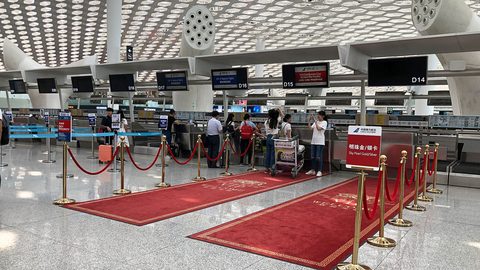 Flying to Anhui or Taking the Train From Shanghai Which Works Better
Flying into Tunxi puts you closest to the mountains, but the Shanghai to Huangshan North train often beats Hefei for total time.
Flying to Anhui or Taking the Train From Shanghai Which Works Better
Flying into Tunxi puts you closest to the mountains, but the Shanghai to Huangshan North train often beats Hefei for total time.
-
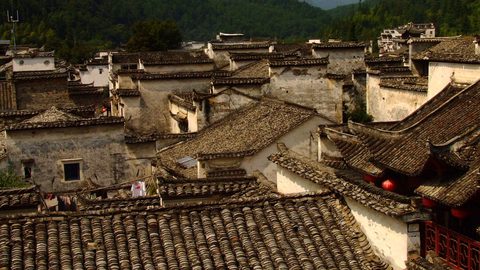 Things to Do in Anhui Beyond Huangshan and Hongcun
Beyond Huangshan, Anhui offers the Taoist Qiyun Shan, the Buddhist Jiuhua Shan, quiet villages like Chengkan, and Qimen black tea country.
Things to Do in Anhui Beyond Huangshan and Hongcun
Beyond Huangshan, Anhui offers the Taoist Qiyun Shan, the Buddhist Jiuhua Shan, quiet villages like Chengkan, and Qimen black tea country.
-
 Best Time to Visit Anhui and Huangshan by Season
April–May and September–October offer the best Anhui weather, but avoid the first week of October and May for National Day and Labour Day crowds.
Best Time to Visit Anhui and Huangshan by Season
April–May and September–October offer the best Anhui weather, but avoid the first week of October and May for National Day and Labour Day crowds.
-
 Getting Around Anhui from Shanghai, Hangzhou and Nanjing
High-speed rail from Shanghai, Hangzhou or Nanjing to Huangshan North is the practical gateway, but villages and trailheads need buses or local cars.
Getting Around Anhui from Shanghai, Hangzhou and Nanjing
High-speed rail from Shanghai, Hangzhou or Nanjing to Huangshan North is the practical gateway, but villages and trailheads need buses or local cars.
-
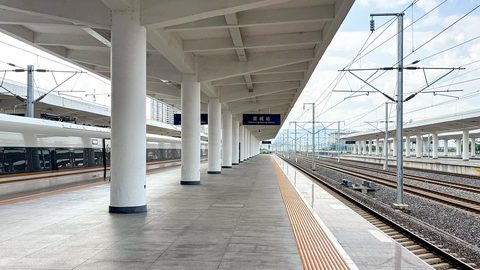 Xuancheng
What Xuancheng prefecture offers travellers moving between Huangshan and the Yangtze, from paper-making towns to quiet bamboo valleys.
Xuancheng
What Xuancheng prefecture offers travellers moving between Huangshan and the Yangtze, from paper-making towns to quiet bamboo valleys.
-
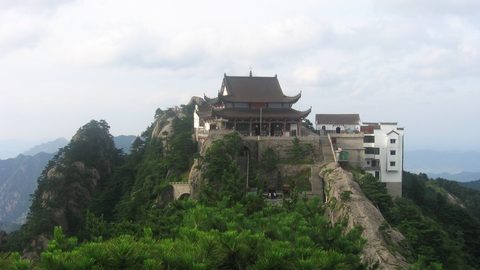 Chizhou
 is the rail gateway to Jiuhua Shan, a sacred Buddhist mountain with temple stays and pilgrimage routes unlike Huangshan.
Chizhou
Chizhou is the rail gateway to Jiuhua Shan, a sacred Buddhist mountain with temple stays and pilgrimage routes unlike Huangshan.
-
 Yixian
 county contains Hongcun and Xidi, but Bishan, Nanping and Guanlu reward travellers who stay longer and move slower.
Yixian
Yixian county contains Hongcun and Xidi, but Bishan, Nanping and Guanlu reward travellers who stay longer and move slower.