What to Actually Buy in Anhui Beyond Trinkets
Shexian inkstones, Qimen black tea and local baked wheat cakes are the only Anhui purchases that justify suitcase space.
Huizhou Ink Sticks: The Wrong One Costs You Twice
You find a shop on a lane that looks older than the others. The woman inside presses ink into a wooden mold by hand. The room smells of pine soot and aged glue. The ink stick she hands you is matte, dense, cool. You pay 150 yuan for something that will still hold its edge in thirty years. Two doors down, a shelf of identical looking ink sticks with glossy plastic wrappers costs 20 yuan. Those are pressed dust, made to be thrown away on a desk. The difference between a real souvenir and a decorative object is knowing which door to walk through.
Shexian Inkstones Require Reading the Stone, Not the Price Tag
The She inkstone is one of China's four famous inkstones, and it comes from Shexian county, a 40 minute bus or car ride from Tunxi. A proper workshop stone costs 300 to 3,000 yuan for a hand carved piece in the 15 to 30 centimeter range. Above 10,000 yuan buys fine Luowen or large grade material. Souvenir grade stones run 50 to 200 yuan and are machine carved from low grade stone. Do not confuse them.
How To Identify A Real She Inkstone
Pick it up. A genuine She inkstone feels cool and dense because the stone is compressed sedimentary rock. Look at the grain under light. It should be visible and varied, not uniform. Run a finger across the ink pool; it should feel smooth but not glassy or waxed. Hand carved stones show uneven tool marks. If the surface is painted, waxed, or polished into a uniform shine, it is a souvenir. A workshop seller will let you touch the stone. If the vendor keeps it behind glass, walk out.
What You Pay For
Workshop She inkstones use She stone from ancient Shezhou, with named varieties including Luowen, Meizi, Jinshuang, and Shui Xian. A hand carved piece from a known carver costs what it costs because the work takes days. Machine carved stones use low grade stone and a CNC router, meaning they look identical, feel light, and do not hold ink well. The tradeoff is price versus function. If you want to actually grind ink, buy the workshop stone. If you want a desk object that looks like an inkstone, buy the souvenir one. Both are sold in Shexian. The difference is whether you know to ask for the workshop.
Where To Look In Shexian
Shexian's Huizhou Ancient City has working studios tucked behind the tourist frontages. Look for shops where you can see the carver at work or where stones are stacked openly on tables. The 10 to 20 percent of Tunxi Old Street shops that are independent workshops can also have genuine inkstones, but the share is small. Most storefronts on Old Street, 60 to 80 percent, sell packaged sets aimed at tour groups. Those are not what you want.

Qimen Tea Requires a Grade, Not a Name
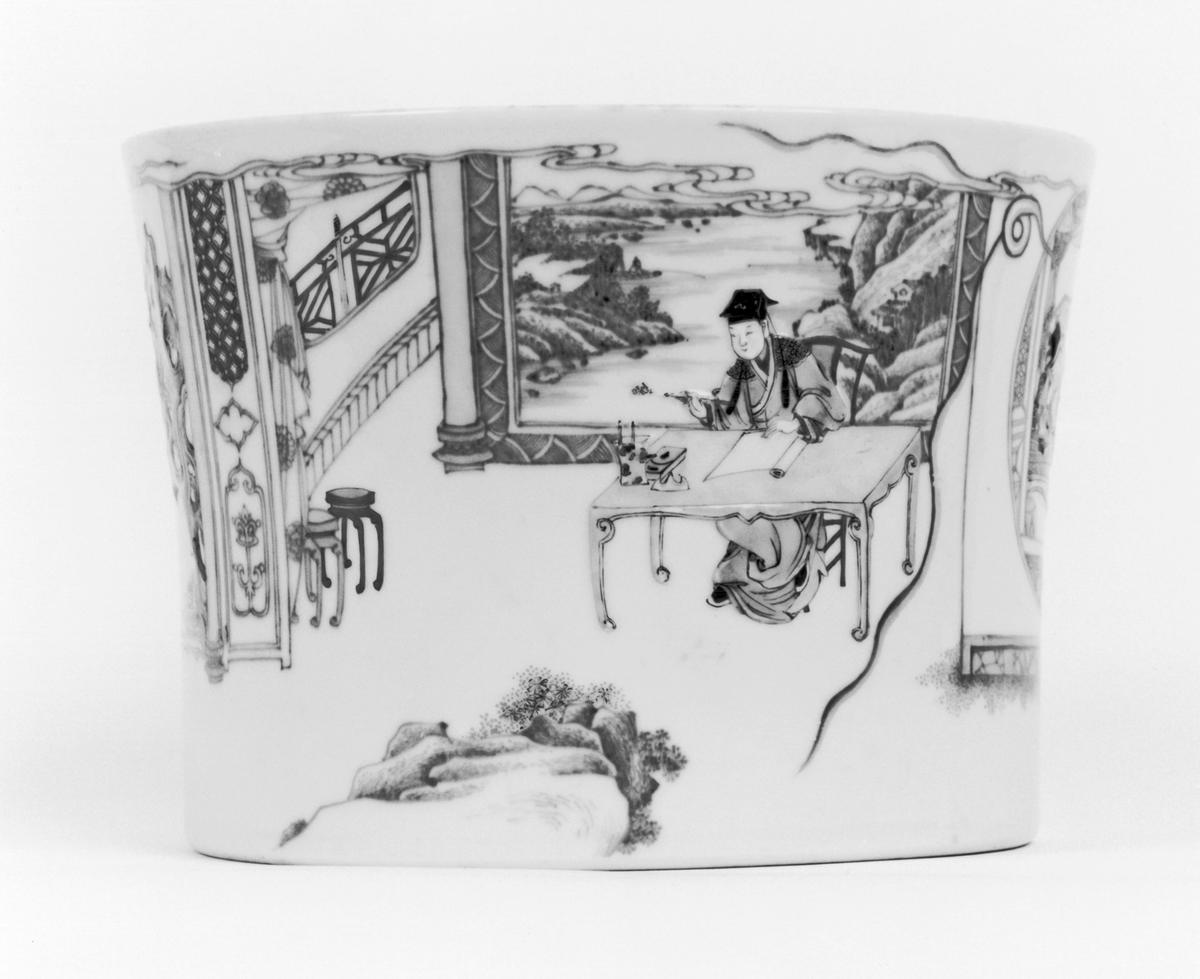
Keemun black tea comes from Qimen county, a district within Huangshan city. The name alone guarantees nothing. The grade system is what you pay for. Hao Ya A, the top grade, runs 600 to 1,500 yuan per 500 grams, variable by annual harvest. Special Grade is 300 to 600 yuan. Grade 1 is 150 to 300 yuan. Grades 3 through 5 drop to 60 to 150 yuan. Grading depends on leaf bud content, uniformity, golden tip ratio, aroma intensity, and liquor color. A sealed bag labeled Keemun bought on Tunxi Old Street for 50 yuan is Grade 5 or below, if the label is honest at all.
Where To Buy Without Getting Cheated
Buy from a tea specialist in Tunxi or from a shop that lists the grade on the package. Fixed price tea stores do not bargain, but they also do not mislabel. Government branded stores and chain tea shops are reliable. If you are in Qimen county itself, you can buy directly from producers, but you need to know the grade language. Do not bargain on graded tea; the price is set by the leaf quality, not the seller's mood. Bargaining norms in Anhui markets allow a 30 to 50 percent counteroffer on general goods, but not on graded tea in a fixed price shop.
The Alternative Tea Worth Considering
Huangshan Maofeng, a green tea, is the other famous local product. Te Ji (Superfine) pre Qingming harvest runs 800 to 2,000 yuan per 500 grams. Grade 1 costs 200 to 400 yuan. Maofeng grading depends on bud to leaf ratio, picking date, and downy tip presence. If black tea is not your preference, Maofeng is the local substitute with the same integrity of grading. But do not buy loose tea from open bins on Old Street without a grade label. Packaged tea from a proper shop is the safer buy.
Huizhou Ink Sticks: Pressed by Hand or Pressed by Machine
The Huizhou ink stick originated in this region, with production historically centered in Shexian, Xiuning, and Tunxi. Workshop sticks cost 50 to 500 yuan for 30 to 100 gram sizes, higher for aged or decorated pieces. Souvenir sticks cost 10 to 40 yuan for small sets or pressed pieces. The difference is visible within seconds.
Hand Pressed Versus Machine Made
A hand pressed ink stick has a matte surface, no visible mold seams, and includes an ink swatch and a maker seal on the box. A pressed stick has a high gloss finish, uniform shape from the mold, a printed paper wrapper, and no maker seal. The base materials for real Huizhou ink sticks include pine soot or lampblack, animal glue, musk, gold leaf, and herbal additives. The machine version uses synthetic binders and carbon black. One will grind into ink that lasts centuries. The other smudges. Same price difference logic applies as with inkstones.
Where Hand Pressed Sticks Survive
Shexian and the independent workshops on Tunxi Old Street are the places. Ask to see the mold and the press. If the shop has one, they are makers. If they only have shelves of glossy boxes, they are resellers of the tour group product. The 10 to 20 percent of Old Street shops that operate as working studios will let you watch the pressing. The other 60 to 80 percent will sell you a box set with five colors of ink stick for 100 yuan. Those are not souvenirs. Those are packaging.
Tunxi Old Street: Eat the Cakes, Skip the Packaged Goods
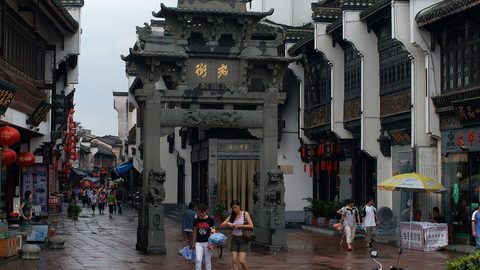
Tunxi Old Street runs 1,270 meters with over 300 shops. The majority sell packaged tea, inkstone and ink stick sets aimed at group tours. Do not go there to buy serious tea or ink. Go there for the food. The sesame cake and the Huangshan baked wheat cake are the two edible souvenirs worth carrying home. The sesame cake is crisp, sweet or savory, and flat. The baked wheat cake is a flaky flatbread, often filled with pork or vegetables. Both are made in front of you at small stalls. Buy them hot and eat them immediately, or buy a sealed pack for the journey. They cost a few yuan each.
The independent workshop share on Old Street is real but small. If you find a working studio, you can buy genuine ink or an inkstone there, but you need to verify the piece using the identification methods above. Do not trust a shop because the facade looks old. The street is all Ming Qing style architecture. The age of the building does not correlate with the age of the product inside.

Who Should Buy an Inkstone and Who Should Walk Away
The inkstone markets of Shexian are for the traveler who wants to carry home something that was made by a person, not a machine. If you are willing to spend 40 minutes getting from Tunxi to Shexian, to ask a carver about stone grain, and to pay 300 yuan for an inkstone that will outlive you, then these markets reward the effort. If you want a one stop shop where you can grab a gift in 10 minutes and trust the label, buy the baked wheat cakes from a stall on Old Street and call it done. These purchases are not for the traveler who wants to tick a souvenir box. They are for the one who wants to learn why some shops stay open and others just sell boxes.
Common Questions
Can I bargain for a She inkstone in a workshop?
Yes, but modestly. A 5 to 15 percent discount is normal on hand carved workshop pieces. Larger discounts are rare for signed works from known carvers. If the seller agrees to 50 percent off immediately, the asking price was inflated for tourists.
How do I pay for tea and ink in Shexian or Tunxi?
Cash works everywhere. Alipay and WeChat Pay accept foreign Visa, Mastercard, JCB and Amex via card binding or Tour Pass. UnionPay foreign cards work in larger shops. Visa and Mastercard direct swipe works in under 10 percent of Old Street stalls.
Is it safe to buy Keemun tea from a roadside stall in Qimen county?
No. Without a grade label, you cannot verify what you are buying. Fixed price tea stores and government branded shops charge the correct price for the grade. Roadside stalls sell tea to people who do not know the difference.
Can I get a VAT refund on inkstones or tea?
Yes, on purchases over 500 yuan at designated tax free stores in Anhui. Ask the shop for the paperwork before you pay. Not all shops participate, and the refund applies to goods you carry out of China.
Read next
-

 Anhui Hotels from Huangshan Summit to Huizhou Courtyards
Huangshan summit hotels sell out weeks ahead and are the only legal way to sleep on the mountain; village guesthouses trade comfort for atmosphere.
Anhui Hotels from Huangshan Summit to Huizhou Courtyards
Huangshan summit hotels sell out weeks ahead and are the only legal way to sleep on the mountain; village guesthouses trade comfort for atmosphere.
-
 Where to Stay in Anhui for Huangshan and the Villages
Tunxi is the convenient transport hub, Tangkou suits hikers, summit hotels give sunrise access, and village courtyards offer atmosphere but less mobility.
Where to Stay in Anhui for Huangshan and the Villages
Tunxi is the convenient transport hub, Tangkou suits hikers, summit hotels give sunrise access, and village courtyards offer atmosphere but less mobility.
-
 Flying to Anhui or Taking the Train From Shanghai Which Works Better
Flying into Tunxi puts you closest to the mountains, but the Shanghai to Huangshan North train often beats Hefei for total time.
Flying to Anhui or Taking the Train From Shanghai Which Works Better
Flying into Tunxi puts you closest to the mountains, but the Shanghai to Huangshan North train often beats Hefei for total time.
-
 Things to Do in Anhui Beyond Huangshan and Hongcun
Beyond Huangshan, Anhui offers the Taoist Qiyun Shan, the Buddhist Jiuhua Shan, quiet villages like Chengkan, and Qimen black tea country.
Things to Do in Anhui Beyond Huangshan and Hongcun
Beyond Huangshan, Anhui offers the Taoist Qiyun Shan, the Buddhist Jiuhua Shan, quiet villages like Chengkan, and Qimen black tea country.
-
 Best Time to Visit Anhui and Huangshan by Season
April–May and September–October offer the best Anhui weather, but avoid the first week of October and May for National Day and Labour Day crowds.
Best Time to Visit Anhui and Huangshan by Season
April–May and September–October offer the best Anhui weather, but avoid the first week of October and May for National Day and Labour Day crowds.
-
 Getting Around Anhui from Shanghai, Hangzhou and Nanjing
High-speed rail from Shanghai, Hangzhou or Nanjing to Huangshan North is the practical gateway, but villages and trailheads need buses or local cars.
Getting Around Anhui from Shanghai, Hangzhou and Nanjing
High-speed rail from Shanghai, Hangzhou or Nanjing to Huangshan North is the practical gateway, but villages and trailheads need buses or local cars.
-
 Huangshan (Yellow Mountain)
Huangshan's south gate, cable car choices and summit loop explained, so you can plan a realistic one- or two-day mountain route.
Huangshan (Yellow Mountain)
Huangshan's south gate, cable car choices and summit loop explained, so you can plan a realistic one- or two-day mountain route.
-
 Xuancheng
What Xuancheng prefecture offers travellers moving between Huangshan and the Yangtze, from paper-making towns to quiet bamboo valleys.
Xuancheng
What Xuancheng prefecture offers travellers moving between Huangshan and the Yangtze, from paper-making towns to quiet bamboo valleys.
-
 Huangshan City
Tunxi is not Anhui's prettiest town, but its rail station, bus hub and Old Street make it the most useful base.
Huangshan City
Tunxi is not Anhui's prettiest town, but its rail station, bus hub and Old Street make it the most useful base.