Inside Taiji Cave at Guangde and the Chinese Show Cave Experience
What the Taiji Cave at Guangde is actually like inside, and how Chinese show caves differ from Western caving experiences.
Inside Taiji Cave at Guangde and the Chinese Show Cave Experience
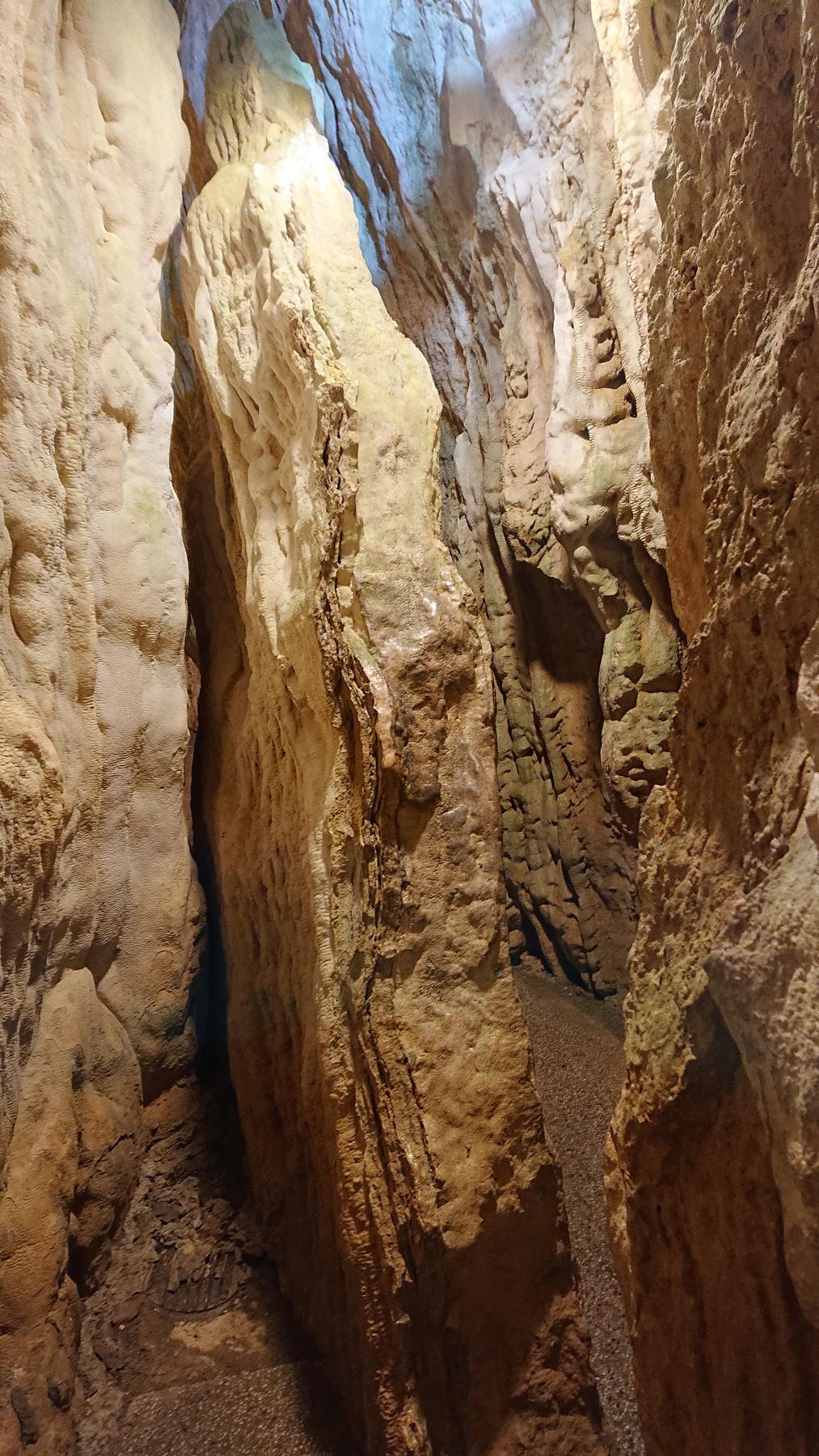
You might assume a cave is a cave, lit or unlit. That assumption will lead you wrong. A show cave in China is not a Western show cave with polite walkways and subtle lighting. It is a different category of attraction entirely, and Taiji Cave at Guangde is a textbook example. If you understand Taiji Cave, you understand the genre. The genre has coloured LED floods, a compulsory guide, amplified commentary that echoes through every chamber, and a fixed one-way route that herds you through the system in just over an hour. You get it, or you do not. There is no middle ground.
Taiji Cave sits in Guangde County, Xuancheng, in Anhui province. The total cave system runs 5,400 metres. The visitor route covers roughly 1,200 metres of that, with a vertical range of about 30 metres. The earliest written record dates to the Ming dynasty, between 1368 and 1644. Ming and Qing dynasty carved characters survive on the rock inside. The cave stays at 16 to 18 degrees Celsius year round. Bring a light jacket or long sleeves, even in July.
- Location: Guangde County, Xuancheng, Anhui, China
- Total Cave Length: 5,400 m
- Open Section: Approx. 1,200 m
- Vertical Range: Approx. 30 m
- Earliest Record: Ming dynasty (1368, 1644)
- Entry Price: ¥60, ¥80 per person
- Visit Duration: 1 to 1.5 hours
- Underground Temperature: 16, 18°C year round
- Route Type: Fixed one way with mandatory guide
Inside Taiji Cave
The Guided Group Entry
Buy your ticket at the entrance and wait for a group to fill. Entry is by guided group only. There is no self-guided option. When the group moves, you move. The cave guide leads you through a sequence of chambers, each soaked in a different colour. Red. Green. Blue. Purple. Fixed LED and floodlighting picks out stalactites, stalagmites and curtains of flowstone. The cave guide points at formations and tells you what they resemble: a dragon, a phoenix, a waterfall turned to stone. The commentary is loud and relentless. It is in Mandarin. Do not expect English narration.
The Route and the Boat Section
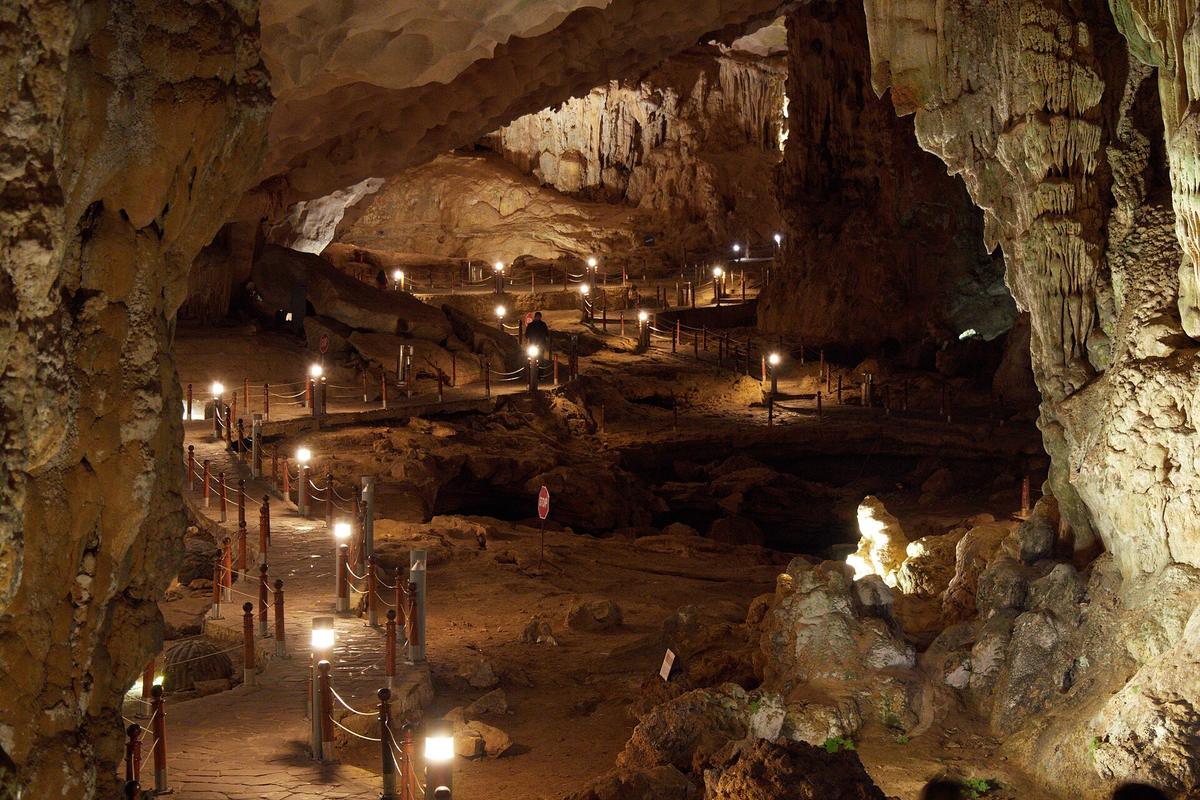
The walkway is a concrete path with railings, well maintained and safe. It climbs and descends across the 30-metre vertical range, but the gradients are gentle. There is a boat section on an underground stream. Board the small electric boat and ride through a low-lit passage for several minutes. The boat runs on a fixed schedule and fits into the group flow, so there is no waiting around. This is the most distinctive part of the route and the part that justifies the detour more than any coloured rock formation does.
The whole route is one way. You cannot double back. You cannot stop for ten minutes to get a clean photograph without the cave guide's commentary in the background. The group keeps moving. If you want to linger, stay at the back and catch up at the boat station. That is your only window for a quiet moment.
The Chinese Show Cave Difference
Western cave tourism, in places like the United States or France, treats the cave as a natural monument requiring minimal intervention. Walkways are dark. Lighting is subtle, often monochrome, and meant to reveal geology without creating a spectacle. Guides speak at a normal volume and sometimes let you walk ahead. Taiji Cave does the opposite. The lighting is the attraction. The commentary is the attraction. The colour saturation, the boat ride, the choreographed group movement, that is what the domestic audience pays for. It is a performance, not a nature walk.
That does not make it bad. It makes it specific. If you arrive expecting the Postojna Cave experience in Slovenia, you will be confused. If you arrive knowing you are buying into a domestic entertainment format, you might enjoy it. The scale is real. The cave is genuinely large. The boat section on the underground stream is genuinely cool. The rest is a matter of taste.
Getting There And The Detour Question
Taiji Cave is not convenient. That is the biggest friction point. From Xuancheng city, take a bus or drive to Guangde county, then find local transport to the cave entrance. The last leg from Guangde town has limited public transport. Arrange a taxi or a pre-arranged car from your guesthouse. From Huangshan, the trip takes three to five hours each way depending on connections. That is a full-day commitment for a 90-minute cave visit.
Is it worth a detour from Xuancheng? If you are already in Xuancheng and you have a spare half-day, yes. The cave is the most notable attraction in the county, and the boat section gives you something you cannot get at any of the province's other show caves. Is it worth a detour from Huangshan? No. You have Huangshan mountain, Hongcun, Xidi, and a dozen other sites closer to hand. The three-to-five-hour travel time each way eats a day you could spend on the mountain or in the villages. Skip it unless you have already done everything else in southern Anhui and you have a car.


Who Should Visit Taiji Cave and Who Should Skip It
Go to Taiji Cave if you enjoy the absurdity of domestic tourism in this country, if you find the clash of natural space and artificial lighting fascinating, or if you have kids who will love the coloured lights and the boat ride. Go if you have a car and time to burn in Xuancheng. Skip it if you are a purist about natural caves. Skip it if you are on a tight schedule in Anhui and you have not seen Huangshan, Hongcun or Xidi yet. Skip it if you are a first-time visitor who finds Mandarin-only signage and loud group commentary exhausting.
Taiji Cave suits travellers who are comfortable with limited English signage, who have handled local language apps for booking transport, and who accept that a three-hour travel window is normal for a single sight in Anhui. It does not suit anyone looking for a quick, quiet, self-directed cave hike. The genre determines the experience. Taiji Cave is a pure example of that genre. Decide which side you are on before you buy the ticket.
Common Questions
How long does it take to visit Taiji Cave?
The guided route takes 1 to 1.5 hours. Add 30 minutes for ticket purchase and waiting for a group to form.
Is there a boat ride inside the cave?
Yes. An electric boat runs on an underground stream as part of the fixed route. It lasts several minutes and is included in the entry price.
Can I visit Taiji Cave without a guide?
No. Entry is by guided group only. There is no self-guided option.
What is the entry price for Taiji Cave?
The price is ¥60 to ¥80 per person, varying by season and promotional periods.
How do I get to Taiji Cave from Xuancheng?
Take a bus or drive to Guangde county, then arrange a taxi or local car to the cave entrance. The last leg from Guangde town has limited public transport.
What should I wear inside the cave?
Bring a light jacket or long sleeves. The temperature stays at 16 to 18 degrees Celsius year round.
Is Taiji Cave worth a detour from Huangshan?
No. The trip takes 3 to 5 hours each way. If you are based in Huangshan, spend your day on the mountain or in the Huizhou villages instead. From Xuancheng, it is a reasonable half-day trip.
Read next
-
 Anhui Hotels from Huangshan Summit to Huizhou Courtyards
Huangshan summit hotels sell out weeks ahead and are the only legal way to sleep on the mountain; village guesthouses trade comfort for atmosphere.
Anhui Hotels from Huangshan Summit to Huizhou Courtyards
Huangshan summit hotels sell out weeks ahead and are the only legal way to sleep on the mountain; village guesthouses trade comfort for atmosphere.
-
 Where to Stay in Anhui for Huangshan and the Villages
Tunxi is the convenient transport hub, Tangkou suits hikers, summit hotels give sunrise access, and village courtyards offer atmosphere but less mobility.
Where to Stay in Anhui for Huangshan and the Villages
Tunxi is the convenient transport hub, Tangkou suits hikers, summit hotels give sunrise access, and village courtyards offer atmosphere but less mobility.
-
 Flying to Anhui or Taking the Train From Shanghai Which Works Better
Flying into Tunxi puts you closest to the mountains, but the Shanghai to Huangshan North train often beats Hefei for total time.
Flying to Anhui or Taking the Train From Shanghai Which Works Better
Flying into Tunxi puts you closest to the mountains, but the Shanghai to Huangshan North train often beats Hefei for total time.
-
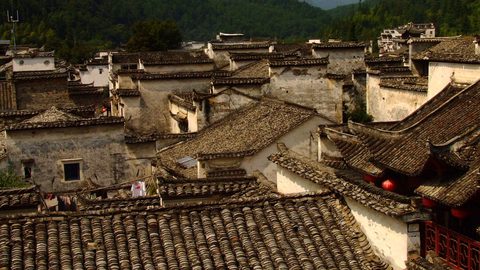 Things to Do in Anhui Beyond Huangshan and Hongcun
Beyond Huangshan, Anhui offers the Taoist Qiyun Shan, the Buddhist Jiuhua Shan, quiet villages like Chengkan, and Qimen black tea country.
Things to Do in Anhui Beyond Huangshan and Hongcun
Beyond Huangshan, Anhui offers the Taoist Qiyun Shan, the Buddhist Jiuhua Shan, quiet villages like Chengkan, and Qimen black tea country.
-
 Best Time to Visit Anhui and Huangshan by Season
April–May and September–October offer the best Anhui weather, but avoid the first week of October and May for National Day and Labour Day crowds.
Best Time to Visit Anhui and Huangshan by Season
April–May and September–October offer the best Anhui weather, but avoid the first week of October and May for National Day and Labour Day crowds.
-
 Getting Around Anhui from Shanghai, Hangzhou and Nanjing
High-speed rail from Shanghai, Hangzhou or Nanjing to Huangshan North is the practical gateway, but villages and trailheads need buses or local cars.
Getting Around Anhui from Shanghai, Hangzhou and Nanjing
High-speed rail from Shanghai, Hangzhou or Nanjing to Huangshan North is the practical gateway, but villages and trailheads need buses or local cars.
-
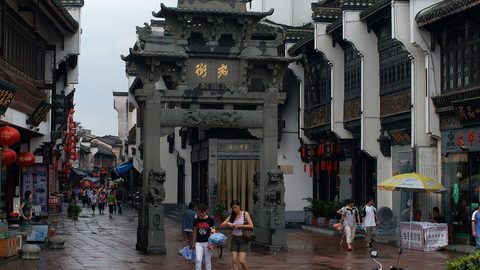 Huangshan City
Tunxi is not Anhui's prettiest town, but its rail station, bus hub and Old Street make it the most useful base.
Huangshan City
Tunxi is not Anhui's prettiest town, but its rail station, bus hub and Old Street make it the most useful base.
-
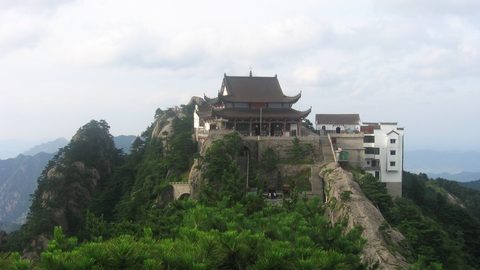 Chizhou
 is the rail gateway to Jiuhua Shan, a sacred Buddhist mountain with temple stays and pilgrimage routes unlike Huangshan.
Chizhou
Chizhou is the rail gateway to Jiuhua Shan, a sacred Buddhist mountain with temple stays and pilgrimage routes unlike Huangshan.
-
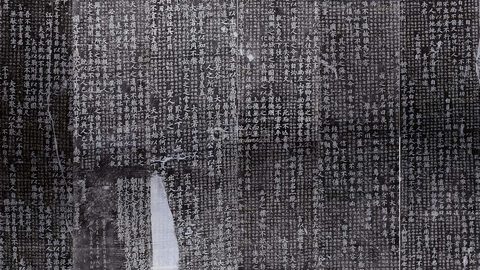 Yixian
 county contains Hongcun and Xidi, but Bishan, Nanping and Guanlu reward travellers who stay longer and move slower.
Yixian
Yixian county contains Hongcun and Xidi, but Bishan, Nanping and Guanlu reward travellers who stay longer and move slower.