A Realistic Anhui Travel Budget for Five Days
A five-day Anhui trip costs far more than a city stay, and Huangshan summit hotels plus cable cars drive most of it.
A Realistic Anhui Travel Budget for Five Days
Most travellers budget for Anhui as if it is cheap rural China. It is not. A five-day trip here costs roughly the same as a shorter trip to Shanghai, because Huangshan, the reason you came, has two non-negotiable budget killers: summit accommodation and cable cars. Those two items alone can run ¥500 to ¥1,000 per day. The rest of the province is genuinely inexpensive, but you cannot dodge those summit costs without changing your itinerary entirely.
Here is what a realistic five-day spend looks like, broken down by category: summit hotel, cable cars, village tickets, transport, and food. Two scenarios below: one with an overnight on the peak, one using Tunxi as a base and skipping the summit stay.

The Four Fixed Costs You Cannot Reduce
Huangshan Entry Ticket
¥190 in high season (March to November), ¥150 in low season. No discounts, no bundles. You pay this whether you hike or take the cable car.
Cable Cars: One-Way Only, No Return Discount
Three cable cars serve the peak, each charging a one-way fare with no round-trip saving. Yungu costs ¥80, Yuping costs ¥90, Taiping costs ¥80. If you go up one side and down another, typical for a loop, you pay two fares. The Xihai Grand Canyon funicular adds ¥100 one-way. A standard summit day using two cable cars plus the funicular costs ¥270 in cable fees alone.
Summit Hotel: The Budget Killer
A dorm bed on the summit runs ¥200 to ¥400 per night. A standard double room costs ¥1,000 to ¥1,800. Valley hotels in Tangkou, at the base, charge ¥150 to ¥400 for a double. That is a six-to-ten-times markup for sleeping at altitude. The summit stay is the single biggest cost you control: skip it, and you save ¥600 to ¥1,400 per night.
Village Tickets Are Fixed
Hongcun and Xidi each charge ¥104 entry. No student or time-of-day discounts. Chengkan, Tangyue, and other villages have similar fixed pricing around ¥80 to ¥100. You cannot save here unless you skip the village entirely.
Your Five-Day Budget: Summit Overnight Vs. Tunxi Base
Scenario A: Summit Overnight
You arrive at Huangshan North station, take the shuttle to Tangkou (¥30), ride the Yungu cable car up (¥80), spend one night in a summit dorm (¥300 average), eat dinner and breakfast on the peak (¥150 for two meals), descend via Yuping cable car (¥90), then add Hongcun (¥104), two nights in Tunxi (¥200 per night for a mid-range guesthouse), local meals (¥40 to ¥60 per person), and local transport. Total for five days: ¥2,800 to ¥3,800 per person. The summit overnight accounts for roughly 35% of that total.
Scenario B: Tunxi Base, No Summit Stay
Day-trip Huangshan using one cable car up and down (¥160 round trip), eat lunch at a summit restaurant (¥100) but return to Tangkou for a ¥200 double room. Add Hongcun and Xidi (¥208 total), four nights in Tunxi (¥150 to ¥300 per night), local bus transport (¥50 to ¥100 total), and meals in town (¥30 per meal). Total for five days: ¥1,800 to ¥2,600 per person. You save ¥800 to ¥1,200 entirely by not sleeping on the peak.
The failure case: you book summit accommodation only to find fog blocks every view. The hotel costs the same. Check the forecast before booking, and consider a same-day ascent from Tunxi if clouds are predicted below 1,500 metres.
Transport Costs: the Hidden Time Tax
Trains are predictable. Shanghai Hongqiao to Huangshan North costs ¥140 to ¥190 second class, taking 2.5 to 3 hours. Buses between sights are cheap but slow: Tunxi to Hongcun costs ¥25 and takes 1.5 hours; Hongcun to Tangkou is ¥20 and 45 minutes. The friction is not the fare but the transfer time. A day visiting Hongcun and Xidi from Tunxi eats 3 to 4 hours in transit alone. Trying to add Jiuhua Shan or Taiping Lake to a five-day trip pushes transfer time past six hours. Stick to Huangshan, one village, and one secondary site per day.
Cash works on rural buses, but carry small notes; drivers rarely have change for a ¥100 bill. WeChat Pay and Alipay cover everything in Tunxi and Tangkou. Didi does not operate reliably in Yixian or Shexian villages; ask your guesthouse to call a local driver, and expect to pay ¥80 to ¥120 for a one-way trip to a remote village like Bishan or Guanlu.

Food Costs on and Off the Mountain
A bowl of noodles or a rice dish in Tunxi or Tangkou costs ¥15 to ¥30. A mid-range meal at a local restaurant with stinky mandarin fish and bamboo shoots runs ¥40 to ¥80 per person. On the summit, that same meal jumps to ¥80 to ¥150 per person, a 100% markup for the altitude. Pack instant noodles and a thermos if you are on a tight budget; hot water is free at summit hotel lobbies. The baked wheat cakes sold at Tangkou bus station (¥5 each) make a decent trail lunch. Avoid the summit restaurants unless you already committed to the overnight.
Frequently Asked Questions
What is the cheapest way to see Huangshan in one day?
Take the first shuttle from Tangkou to the Yungu cable car at 06:30, ascend for ¥80, walk the summit loop (3 to 4 hours), descend via Yuping cable car for ¥90, and return to Tangkou. Total summit cost: ¥270 plus ¥190 entry. No summit hotel needed.
Can I sleep on Huangshan without booking a hotel?
No. Sleeping on the peak outside designated hotels is prohibited and enforced. You must book a summit hotel dorm or double room in advance, especially in April, May and September to October when rooms sell out weeks ahead.
How much should I budget for a five-day trip including Huangshan and two villages?
Budget ¥1,800 to ¥2,600 per person if you stay in Tunxi and day-trip the peak. Budget ¥2,800 to ¥3,800 per person if you include a summit overnight. The difference is almost entirely the summit hotel cost.
Which villages are worth the entry fee?
Hongcun and Xidi are both ¥104 each. Hongcun is more photogenic (crescent pond, film location) but crowded by midday. Xidi has better ancestral halls and fewer tour groups. If you only have time for one, pick Hongcun for the visual payoff.
Is it worth visiting Huangshan in low season?
Yes, if you accept the risk of fog. December to February has frozen peaks and fewer crowds, and entry drops to ¥150. Summit hotels are cheaper, but cable cars close in high wind and ice. Check the peak webcam before travelling.
Read next
-
 Anhui Hotels from Huangshan Summit to Huizhou Courtyards
Huangshan summit hotels sell out weeks ahead and are the only legal way to sleep on the mountain; village guesthouses trade comfort for atmosphere.
Anhui Hotels from Huangshan Summit to Huizhou Courtyards
Huangshan summit hotels sell out weeks ahead and are the only legal way to sleep on the mountain; village guesthouses trade comfort for atmosphere.
-
 Where to Stay in Anhui for Huangshan and the Villages
Tunxi is the convenient transport hub, Tangkou suits hikers, summit hotels give sunrise access, and village courtyards offer atmosphere but less mobility.
Where to Stay in Anhui for Huangshan and the Villages
Tunxi is the convenient transport hub, Tangkou suits hikers, summit hotels give sunrise access, and village courtyards offer atmosphere but less mobility.
-
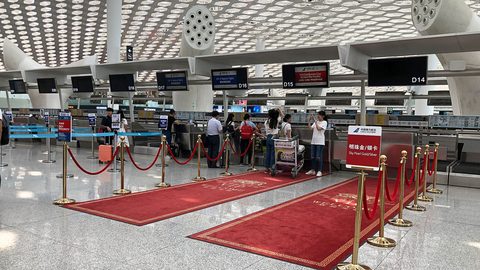 Flying to Anhui or Taking the Train From Shanghai Which Works Better
Flying into Tunxi puts you closest to the mountains, but the Shanghai to Huangshan North train often beats Hefei for total time.
Flying to Anhui or Taking the Train From Shanghai Which Works Better
Flying into Tunxi puts you closest to the mountains, but the Shanghai to Huangshan North train often beats Hefei for total time.
-
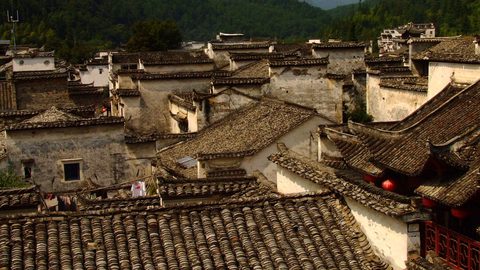 Things to Do in Anhui Beyond Huangshan and Hongcun
Beyond Huangshan, Anhui offers the Taoist Qiyun Shan, the Buddhist Jiuhua Shan, quiet villages like Chengkan, and Qimen black tea country.
Things to Do in Anhui Beyond Huangshan and Hongcun
Beyond Huangshan, Anhui offers the Taoist Qiyun Shan, the Buddhist Jiuhua Shan, quiet villages like Chengkan, and Qimen black tea country.
-
 Best Time to Visit Anhui and Huangshan by Season
April–May and September–October offer the best Anhui weather, but avoid the first week of October and May for National Day and Labour Day crowds.
Best Time to Visit Anhui and Huangshan by Season
April–May and September–October offer the best Anhui weather, but avoid the first week of October and May for National Day and Labour Day crowds.
-
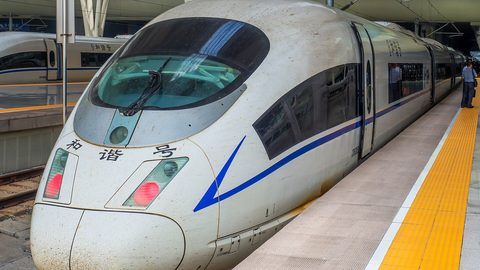 Getting Around Anhui from Shanghai, Hangzhou and Nanjing
High-speed rail from Shanghai, Hangzhou or Nanjing to Huangshan North is the practical gateway, but villages and trailheads need buses or local cars.
Getting Around Anhui from Shanghai, Hangzhou and Nanjing
High-speed rail from Shanghai, Hangzhou or Nanjing to Huangshan North is the practical gateway, but villages and trailheads need buses or local cars.
-
 Huangshan (Yellow Mountain)
Huangshan's south gate, cable car choices and summit loop explained, so you can plan a realistic one- or two-day mountain route.
Huangshan (Yellow Mountain)
Huangshan's south gate, cable car choices and summit loop explained, so you can plan a realistic one- or two-day mountain route.
-
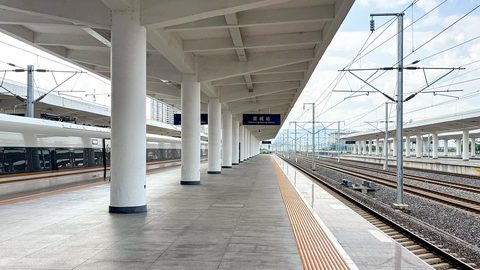 Xuancheng
What Xuancheng prefecture offers travellers moving between Huangshan and the Yangtze, from paper-making towns to quiet bamboo valleys.
Xuancheng
What Xuancheng prefecture offers travellers moving between Huangshan and the Yangtze, from paper-making towns to quiet bamboo valleys.
-
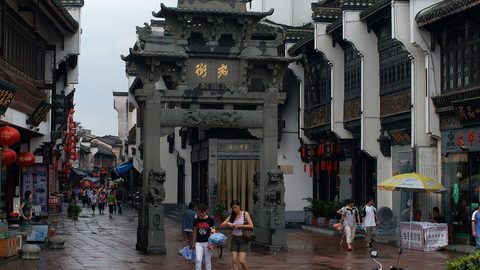 Huangshan City
Tunxi is not Anhui's prettiest town, but its rail station, bus hub and Old Street make it the most useful base.
Huangshan City
Tunxi is not Anhui's prettiest town, but its rail station, bus hub and Old Street make it the most useful base.