Huangshan vs Zhangjiajie for Hikers and Photographers
Huangshan's granite peaks and Huizhou villages or Zhangjiajie's sandstone pillars: which mountain landscape suits your China trip.

Huangshan vs Zhangjiajie for Hikers and Photographers
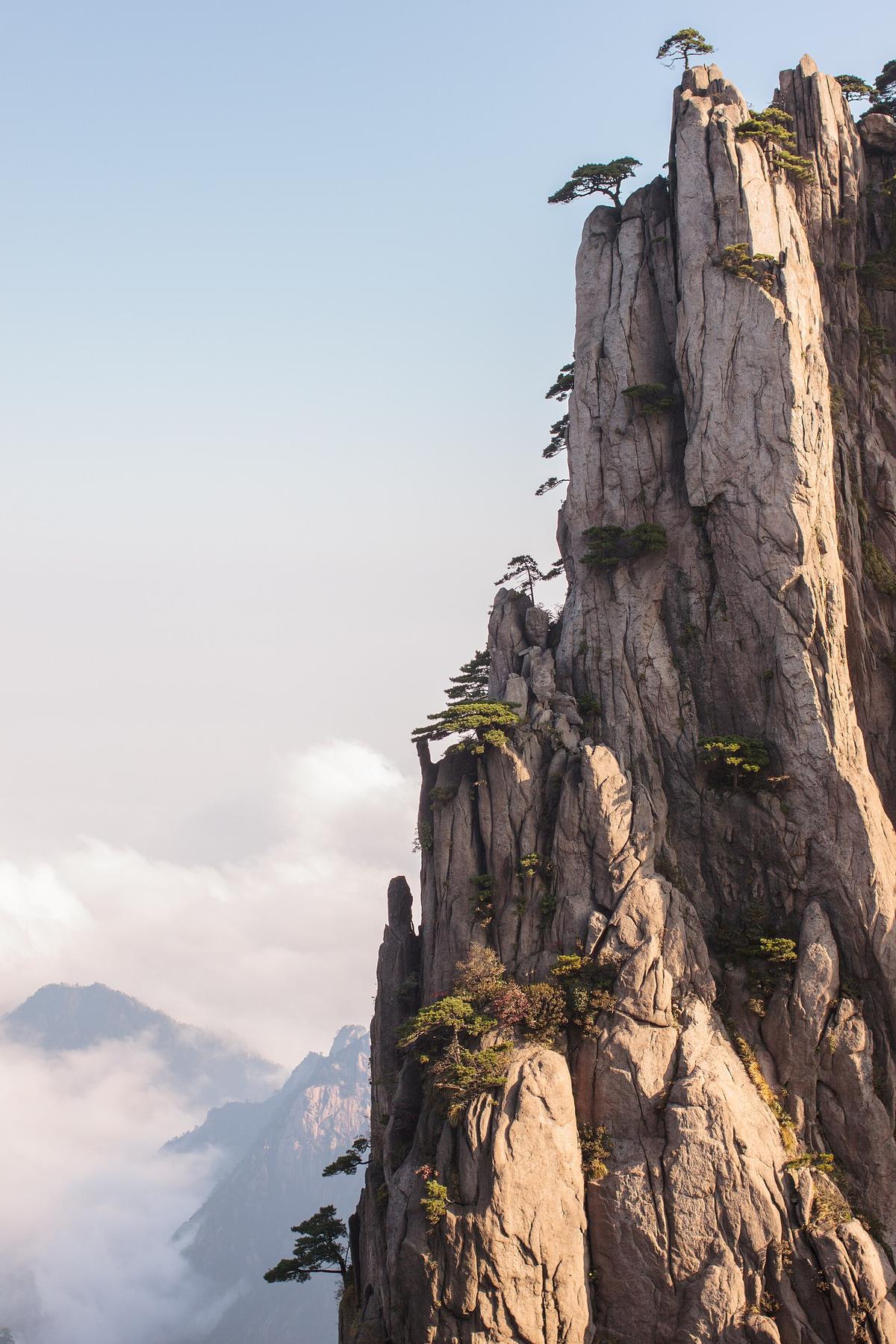
Dawn breaks on Lotus Peak, and you are staring down a sea of clouds that has swallowed every granite dome below. The sun hits the rock face and turns it gold. This is Huangshan. Three hundred kilometres inland, another traveller steps out of a glass elevator that rises 326 metres up a quartz sandstone pillar. Below them, the forest floor drops away into a green abyss. That is Zhangjiajie. The axis these two ranges turn on is not beauty. Both are spectacular. It is logistics, scale, and what you want to do after the sun goes down. One rewards patience and a willingness to move slowly through rural China. The other rewards endurance for crowds, longer travel from the coast, and a taste for amusement park infrastructure bolted onto raw geology. If you have five to seven days and want a landscape trip that feels like an expedition, choose Huangshan. If you want maximal otherworldly scenery per hour of hiking and do not mind queues, choose Zhangjiajie.
| Dimension | Huangshan | Zhangjiajie |
|---|---|---|
| Core Geology | Granite peaks, domes, and spires with exposed rock faces | Quartz sandstone pillars and mesas, up to 200+ m tall |
| UNESCO Status | World Heritage Site (1990) | Global Geopark (2004); Wulingyuan is World Heritage (1992) |
| Main Summit Elevation | 1,864 m (Lotus Peak) | 1,080 m (Yuanjiajie area) |
| Scenic Area Size | 154 km² | 48 km² park; 397 km² Wulingyuan |
| Nearest Airport to Entrance | 1–1.5 h bus from Huangshan Tunxi | 40–60 min from Zhangjiajie Hehua |
| Shanghai to Entrance Travel Time | 4–5 h by HSR plus transfer | 9–11 h by HSR plus transfer |
| Recommended Minimum Time | 2 days (1 day core, 2 days with West Sea Grand Canyon) | 2 full days for main areas; 3–4 for Tianmen and Grand Canyon |
| Cable Car Options | 3 main routes; no cliff elevator | Multiple cableways plus 326 m Bailong Elevator |
| Average Annual Visitors | 3–4 million | 6–8 million (Wulingyuan core) |
| Entry Ticket Price | CNY 190 high season (single entry) | CNY 225 for 4-day pass (multi-entry) |
| Best Photography Month | November (clear skies, autumn foliage) | October (clear skies, autumn foliage peak) |
| Mountain Overnight | Summit hotels, book weeks ahead | Stay in Wulingyuan town; no summit lodging |
| Snow Days per Year | 30–40 | 5–15 |
| Rainy Days per Year | 180–200 | 150–170 |
What Each Destination Demands from You
Huangshan: The Mountain That Requires A Plan
Huangshan is not a casual day trip. The summit sits 60 to 70 kilometres from Tunxi, and getting there takes an hour by bus. Once on the mountain, you face 7,000 granite stairs on the main ascent routes. The reward is a landscape of granite domes, the famous Huangshan pine clinging to cliffs, and the sea of clouds that appears most reliably from November to April. You need at least two days to do it properly: one to reach the summit and explore the West Sea Grand Canyon, a second for sunrise at Bright Summit and the descent. Book a summit hotel months ahead during peak season; beds range from CNY 200 for a dormitory to CNY 1,500 for a private room. Without that reservation, you cannot stay on the mountain, and you lose the sunrise and sunset shots that define the place.
The surrounding villages change the trip entirely. Hongcun and Xidi are UNESCO-listed Huizhou settlements with crescent ponds and ancestral halls. They are 1 to 1.5 hours from Tunxi. Chengkan, with its bagua layout, is quieter. Bishan has a famous independent bookstore. The friction is the distance. A route that strings together Huangshan, Hongcun, and Xidi in three days means 3 to 4 hours on the road each day. Public transport is slow. Didi does not work in remote villages; rely on your guesthouse to call a local driver. English is limited outside Tunxi. This trip suits the traveller who accepts slow travel as part of the experience, not as an obstacle.
Zhangjiajie: The Park That Delivers Every Fifteen Minutes
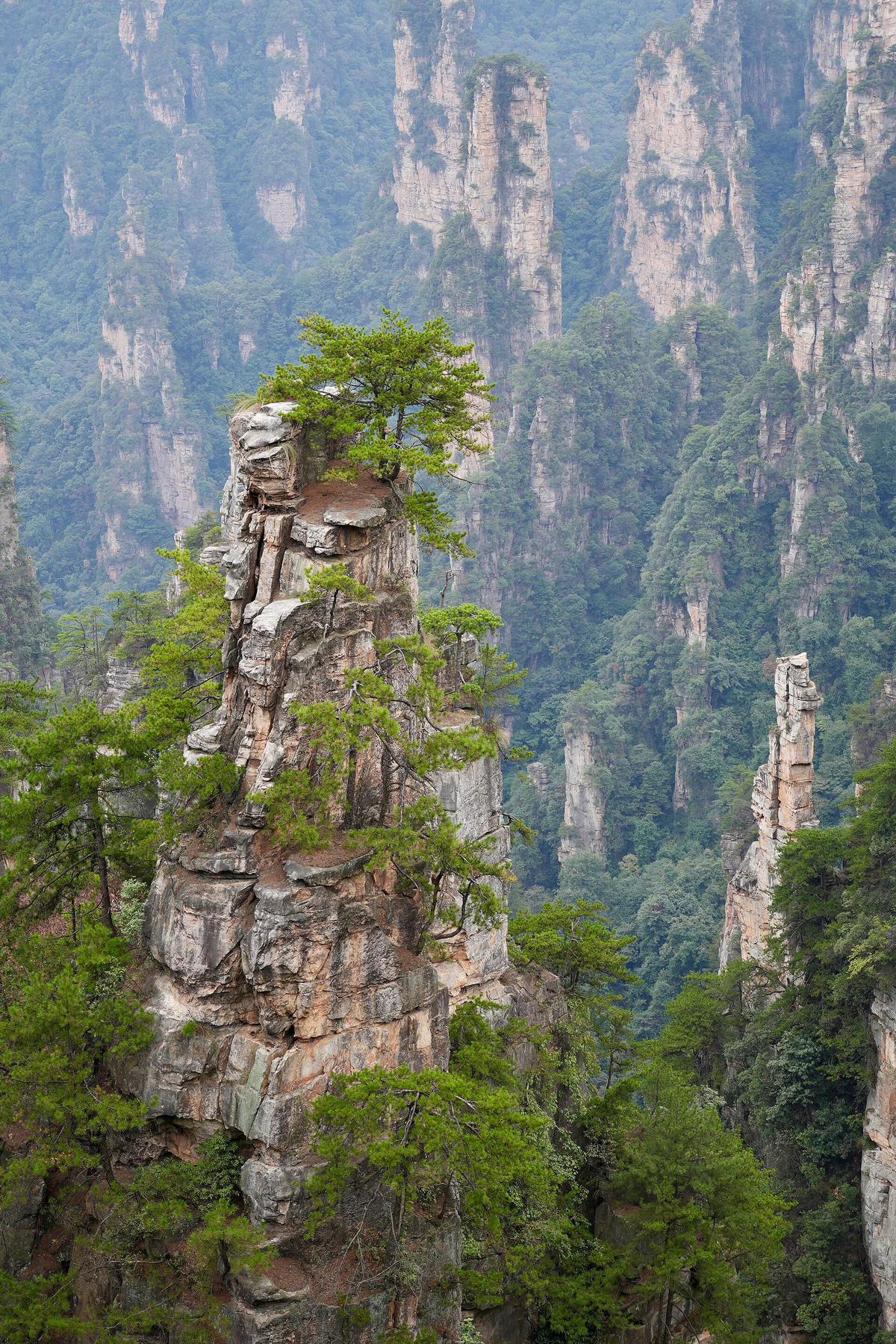
Zhangjiajie is built for throughput. The quartz sandstone pillars rise 200 metres and more. The Bailong Elevator lifts you 326 metres in under 90 seconds. The park has multiple entrance gates, shuttle buses, cableways, and the glass bridge at the Grand Canyon. You can see the Avatar Hallelujah Mountain, walk Golden Whip Stream, and reach Tianzi Mountain in a single day if you move fast. The scale is massive. The Wulingyuan scenic area covers 397 square kilometres. You will use shuttle buses constantly. The crowd numbers are double those of Huangshan: 6 to 8 million visitors annually. Peak season queues for the Bailong Elevator hit 1 to 3 hours. The payoff is that the scenery repeats its shock value at every turn. You do not need to earn the view with a long climb.
The city of Zhangjiajie is 30 to 40 minutes from the park entrance, and the airport is closer to the action than Huangshan's. But getting there from Shanghai takes 7 to 9 hours by high speed rail, compared to 2.5 to 3 hours to Huangshan North. That travel time matters. You cannot do Zhangjiajie in two days from Shanghai without burning a full day each way in transit. Three to four days is the realistic minimum. This trip demands a week.
Photography, Crowds, and the Village Question
Which Landscape Photographs Better
Huangshan wins for classic Chinese landscape photography. The granite spires, the sea of clouds, the twisted pines, the autumn colour in mid October to early November. It is the subject of ink paintings for a reason. November is the best month, when the chance of clear skies and cloud sea peaks. Zhangjiajie wins for pure novelty. The vertical pillars, the mist that fills the valleys in spring and autumn, the glass bridge at 300 metres height. The Avatar connection is real; the pillars look like nothing else on earth. For a photographer who wants a portfolio of definitive China mountain shots, pick Huangshan. For someone who wants alien verticality and wide angle drama, pick Zhangjiajie.
How Crowds Shape Your Experience
Both ranges suffer badly during Chinese public holidays. The first week of October and first week of May are disasters. Avoid them entirely. Huangshan averages 3 to 4 million visitors a year; Zhangjiajie averages 6 to 8 million. The queuing reality is similar at peak times: 1 to 3 hours for cable cars or the elevator. Huangshan manages crowds with one way routes and timed entry tickets. Zhangjiajie spreads visitors across multiple entrances and sub areas. In low season, both have short waits of 10 to 30 minutes. The real difference is that Huangshan's summit is finite. When it is crowded, you feel trapped on narrow staircases. Zhangjiajie's larger area dissipates the crush, except at the Bailong Elevator and Tianzi Mountain cableway.
The Villages That Frame Each Trip
Huangshan sits inside a dense cluster of Huizhou villages. Hongcun, Xidi, Chengkan, Bishan, Nanping. You can spend two full days visiting them without returning to the same scene. They are the reason Huangshan is a better trip for travellers who want culture alongside landscape. Zhangjiajie has no comparable village scene. The Tujia and Miao minority villages exist, but they are not the main draw. The park is the destination. If you want to hike during the day and walk through Ming dynasty alleyways in the evening, choose Huangshan. If you want to maximise time inside a national park, choose Zhangjiajie.
Worth it if
- Shorter travel time from Shanghai (4-5 hours door to door)
- Granite peak landscape with classic Chinese painting aesthetics
- Access to UNESCO Huizhou villages (Hongcun, Xidi) for cultural depth
- Quieter overall visitor numbers at 3-4 million annually
- Winter snow transforms the peaks into a different world
- Tea culture access with Qimen black tea region nearby
Skip it if
- Long transfer times between mountain, villages, and airport can eat 3-4 hours per day
- Summit hotels sell out months ahead and cost CNY 200-1,500 per night
- English signage limited outside Tunxi; menus and bus signs often Chinese-only
- Weather can erase views for a full day; 180-200 rainy days per year
- Single entry ticket means re-entry costs another CNY 150-190
- No cliff elevator or glass bridge infrastructure

Worth it if
- More dramatic pillar landscape unlike anything else on earth
- Bailong Elevator, cableways, and glass bridge reduce physical effort
- Multi-entry 4-day ticket at CNY 225 gives flexibility
- Larger total area (397 km² Wulingyuan) spreads crowds better
- Warmer winter temperatures (0-10°C vs Huangshan's -5 to 5°C)
- Easier summit access with no overnight booking needed
Skip it if
- 9-11 hours travel time from Shanghai each way
- Double the annual visitors at 6-8 million; queues hit 1-3 hours
- No comparable historic villages; the park is the solitary draw
- Limited lodging inside the park; you stay in Wulingyuan town
- Fewer snow days (5-15) for winter photography
- Glass bridge and Bailong Elevator feel theme park rather than wilderness
Common Questions
Which mountain has better photography conditions?
Huangshan for classic Chinese landscape photography with cloud seas and granite peaks. November offers the clearest skies. Zhangjiajie for surreal vertical pillar shots; October is the best month. Both suffer from fog 150 to 200 days a year, so budget extra days for a clear window.
How many days do I need for each?
Huangshan needs 5 days minimum to see the mountain plus one or two villages without rushing. Zhangjiajie requires 3 to 4 days for the main park areas and Tianmen Mountain. From Shanghai, Zhangjiajie demands a week because travel takes 9 to 11 hours each way.
Which is better for solo travellers?
Huangshan. The combination of guesthouses in Tunxi, quieter villages, and lower overall visitor numbers makes it easier to navigate alone. Zhangjiajie's scale and shuttle bus system can feel isolating, and the queues are harder to handle without company.
Can I avoid the crowds at both?
Yes, but only outside Chinese public holidays. Avoid the first week of October, first week of May, and summer weekends. Visit in early November for Huangshan or late October for Zhangjiajie. Arrive at park entrances by 07:00 to beat tour buses.
Which has easier hiking?
Zhangjiajie. The Bailong Elevator, multiple cableways, and valley walks like Golden Whip Stream mean you can see major sights with minimal climbing. Huangshan requires 7,000 granite stairs on the main ascent; the West Sea Grand Canyon has exposed sections not for vertigo sufferers.
Is the glass bridge worth it at Zhangjiajie?
Yes, if you want the experience of walking 300 metres above a canyon on glass. The bridge is 430 metres long. Queue times hit 2 hours in peak season. Book a timed entry online. Skip it if the valley is fogged in, which happens frequently in spring and summer.
Which has better food culture?
Huangshan by a wide margin. The Anhui region produces stinky mandarin fish, Huangshan baked wheat cake, and bamboo shoots braised with ham. Tunxi Old Street has food stalls and tea houses serving Qimen black tea. Zhangjiajie's food scene is functional rather than memorable.
Read next
-
 Getting to Anhui from the Rest of China and How Long You Really Need
High-speed rail routes to Anhui explained: which stations to use from Shanghai, Hangzhou, or Beijing, and how many days Huangshan really needs.
Getting to Anhui from the Rest of China and How Long You Really Need
High-speed rail routes to Anhui explained: which stations to use from Shanghai, Hangzhou, or Beijing, and how many days Huangshan really needs.
-
 Reaching Anhui Visa-Free Through China's Transit Rules for a Huangshan Side Trip
How China's 240-hour visa-free transit rules let you reach Huangshan and the Huizhou villages without a full visa.
Reaching Anhui Visa-Free Through China's Transit Rules for a Huangshan Side Trip
How China's 240-hour visa-free transit rules let you reach Huangshan and the Huizhou villages without a full visa.
-
 Golden Week in Anhui, the Weeks to Avoid and What to Do If You Cannot
What Golden Week does to Huangshan, Hongcun and Anhui transport, and the few ways to reduce the damage if you must travel then.
Golden Week in Anhui, the Weeks to Avoid and What to Do If You Cannot
What Golden Week does to Huangshan, Hongcun and Anhui transport, and the few ways to reduce the damage if you must travel then.
-
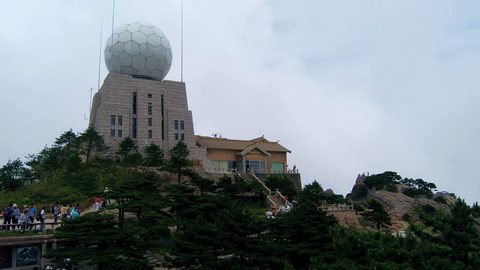 Staying on the Huangshan summit what it costs and how to book
Huangshan summit hotels are expensive and sell out weeks ahead. Here are the names, prices, dormitory options and booking windows.
Staying on the Huangshan summit what it costs and how to book
Huangshan summit hotels are expensive and sell out weeks ahead. Here are the names, prices, dormitory options and booking windows.