What walking up Huangshan actually costs you
Walking up Huangshan takes hours on steep granite steps. Compare the eastern and western routes with cable car queues to decide.

What Climbing Huangshan Actually Costs You
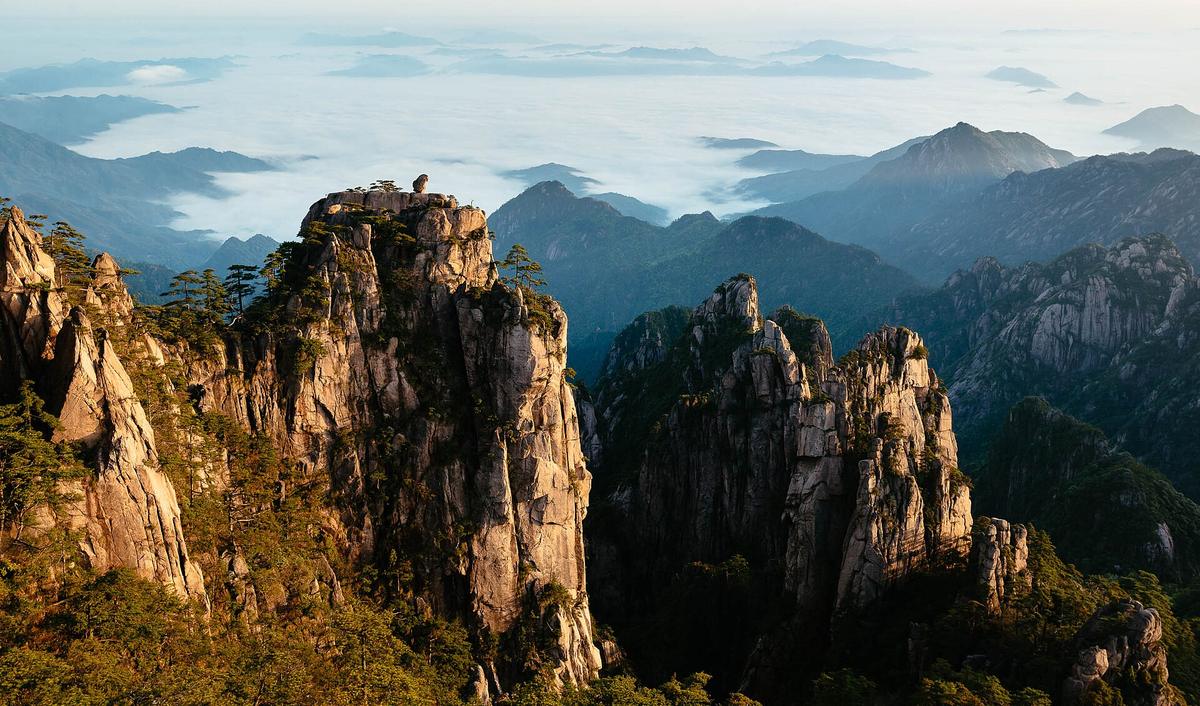
You face 7.5 kilometres and roughly 1,100 metres of vertical gain on the Eastern Steps. That is 60,000 individual granite steps. A fit adult needs 3 to 4 hours. An average adult needs 4 to 6. The cable car does it in 8 to 12 minutes. The real question is not whether you can climb Huangshan. It is whether the time, the knee strain and the recovery cost are worth skipping a queue that can itself run 60 to 90 minutes in peak season.
Most visitors underestimate this climb. They look at 7.5 km and think of a park trail. They do not factor in the relentless gradient, the 15 to 25 cm step-height variation, or the fact that every kilometre is a staircase. The Western Steps are shorter at 6.5 km, with 40,000 steps and 1,000 metres of ascent. A fit adult takes 2.5 to 3.5 hours; average fitness takes 3 to 5. Both routes punish unprepared legs. If you have a history of knee ligament injury, meniscus tear, patellofemoral pain syndrome, or a BMI over 30 without recent stair-climbing conditioning, the medical advice is straightforward: take the cable car.
The Two Routes: Eastern Steps vs Western Steps
Eastern Steps (Front Mountain)
Start at Mercy Light Temple, also called Ciguang Pavilion. Finish at Jade Screen Pavilion, near the Welcome Pine. The 7.5 km route gains 1,100 metres and contains roughly 60,000 steps. Expect 3 to 4 hours if you are fit, 4 to 6 hours if you are not. The first 2 km are the steepest. After that, the gradient eases slightly but the step count does not. You pass small temples and rock carvings, but your focus will be on your quadriceps. Pack one 500 ml bottle from the trailhead at CNY 2 to 3. Do not buy water mid-mountain from porters at CNY 8 to 10 unless you run dry. Summit pricing is CNY 10 to 15 per bottle.Western Steps (Back Mountain)
Start at Cloud Valley Temple, also called Yungu Si. Finish at White Goose Ridge, Bai'e Ling. The 6.5 km route gains 1,000 metres across roughly 40,000 steps. Fit adults take 2.5 to 3.5 hours; average fitness takes 3 to 5. This route is shorter and slightly less steep. It is still 40,000 steps on granite. Many groups ascend the Western Steps and descend the Eastern, or vice versa. That is a full-day commitment: 5 to 9 hours of climbing, plus stops, plus the descent. Do not plan anything else that day.What the Descent Does to Your Knees
Descending Huangshan is harder on your body than ascending. Each downward step places eccentric loading equivalent to 3 to 4 times your bodyweight on your knee joint. With step heights ranging 15 to 25 cm and an average gradient of 30 to 40 degrees on stair sections, the strain concentrates on the patellar tendon and quadriceps. After 2 to 3 hours of uninterrupted downhill stepping, quadriceps fatigue and patellar tendon strain are the rule, not the exception. This is the common underestimated factor. If you climb up and walk down, you face 6 to 9 hours of mountain effort and a very sore next day.
The cable car down costs CNY 90 on the Yuping line (front mountain) or CNY 80 on the Yungu line (back mountain). Ride time is 8 to 12 minutes. Operating hours are 06:30 to 17:00, adjusted seasonally. A combined walk-up, cable-car-down plan takes 4 to 7 hours total. That is the smart compromise: earn the ascent, spare the knees.

When Climbing Makes Sense and When it Does Not
When to Climb
Climbing Huangshan makes sense if you are a confident hiker with no knee history, you have 5 to 6 hours to dedicate to the ascent alone, and you want to experience the mountain at a pace where you feel the altitude change and the granite under your feet. It also makes sense if the cable car queue is over 90 minutes long. That happens regularly during Labour Day (first week of May), National Day (first week of October), and autumn weekends. In that case, climbing can actually be faster than waiting.When to Ride
Climbing does not make sense if you have any contraindication: history of knee injury, BMI over 30 without training, uncontrolled hypertension, or ischaemic heart disease. It does not make sense on a tight schedule. A single-base trip covering Huangshan plus two villages demands at least 5 days. Wasting half a day on an unnecessary climb eats into that. It also does not make sense in heavy rain or fog. Late June through July brings humidity and rain that turns steps into slip hazards. The mountain can erase views for a full day. If visibility is zero, you climb up and see nothing; you take the cable car and still see nothing, but you save 4 hours.Common Questions
How long does it actually take to climb Huangshan?
Eastern Steps: 3 to 4 hours if fit, 4 to 6 hours average. Western Steps: 2.5 to 3.5 hours if fit, 3 to 5 hours average. Add 1 to 2 hours for photo stops and rest breaks. Climbing both routes in a single day takes 6 to 9 hours.
Is it cheaper to climb Huangshan than take the cable car?
No meaningful difference. A cable car ride costs CNY 80 to 90. The climb costs your time. Bottled water at the summit costs CNY 10 to 15; a meal runs CNY 60 to 120. Pack your own food to save money on either option.
Can I climb up and take the cable car down?
Yes. Climb the Eastern Steps to Jade Screen Pavilion, then take the Yuping Cable Car down (CNY 90, 8 to 12 minutes). Or climb the Western Steps and take the Yungu Cable Car down (CNY 80). Total time: 4 to 7 hours.
What should I do if the cable car queue is over 90 minutes?
Climb the Western Steps from Cloud Valley Temple. At 2.5 to 3.5 hours for fit adults, you will likely reach the summit faster than waiting. Bring water from the trailhead at CNY 2 to 3 per bottle and avoid buying from porters mid-mountain.
Read next
-
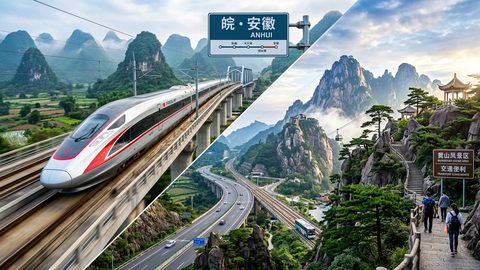 Getting to Anhui from the Rest of China and How Long You Really Need
High-speed rail routes to Anhui explained: which stations to use from Shanghai, Hangzhou, or Beijing, and how many days Huangshan really needs.
Getting to Anhui from the Rest of China and How Long You Really Need
High-speed rail routes to Anhui explained: which stations to use from Shanghai, Hangzhou, or Beijing, and how many days Huangshan really needs.
-
 Reaching Anhui Visa-Free Through China's Transit Rules for a Huangshan Side Trip
How China's 240-hour visa-free transit rules let you reach Huangshan and the Huizhou villages without a full visa.
Reaching Anhui Visa-Free Through China's Transit Rules for a Huangshan Side Trip
How China's 240-hour visa-free transit rules let you reach Huangshan and the Huizhou villages without a full visa.
-
 Golden Week in Anhui, the Weeks to Avoid and What to Do If You Cannot
What Golden Week does to Huangshan, Hongcun and Anhui transport, and the few ways to reduce the damage if you must travel then.
Golden Week in Anhui, the Weeks to Avoid and What to Do If You Cannot
What Golden Week does to Huangshan, Hongcun and Anhui transport, and the few ways to reduce the damage if you must travel then.
-
 Huangshan or Zhangjiajie, Which China Peak Landscape Fits Your Trip
Huangshan's granite peaks and Huizhou villages or Zhangjiajie's sandstone pillars: which mountain landscape suits your China trip.
Huangshan or Zhangjiajie, Which China Peak Landscape Fits Your Trip
Huangshan's granite peaks and Huizhou villages or Zhangjiajie's sandstone pillars: which mountain landscape suits your China trip.